Do you know how to seize a reader’s curiosity?

With a breath and a pause.

Have you ever watched a daytime soap-opera? Now I think the shows are referred to as daytime drama. LOL

One of the most memorable moments were the ominous music indicating something had or was about to happen. To find out what, the viewer had to sit through a commercial.

How do I know this? Okay, I confess. As a young sleep-deprived mother, I watched a few daytime dramas. In the afternoon I rocked and begged my baby to take a nap while watching Days of Our Lives.

So you may ask, what does this have to do with my novel?

Use a dramatic pause to hook the reader. Make them want to turn the page and continue reading.

No need to trick a reader. Just drop in a dramatic pause that makes them think, wonder and want to hurry on.

I loved this post by Janice HardyWait For It: Hook Lines and the Dramatic Pause. After reading her post, I rewrote my first page. There were a few places I could add a pause to hint at what was to come.

Have you tried or considered adding such a pause?

Did it help your hook?

Do let me know what you think about the article and the idea. I’d love to hear your thoughts.

PS: The dramatic music always woke her up. So, I spent a lot of time rocking. LOL

Go the F**k to Sleep by [Mansbach, Adam, Ricardo Cortes]

PLEASE TAKE ANOTHER MINUTE AND LOOK ME UP ON SOCIAL MEDIA BY CLICKING ON THE LINKS BELOW.
AND STOP BY JEAN’S WRITING ANYTIME, I’LL LEAVE A LIGHT ON. 

FacebookTwitterAmazonPinterestStumbleupon 


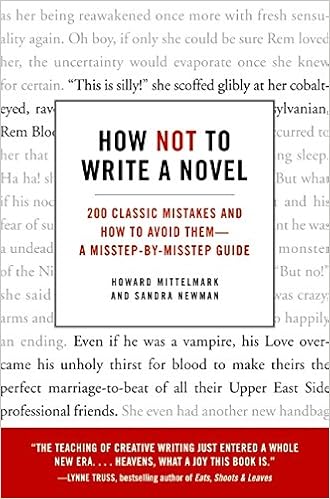
How to not write a badass novel

I’ve worked on my novel for a year now and it’s slow going. Sometimes it’s because I can’t stop editing as I go, other times life gets in the way. So, I worry if by the time I finish the damn thing will it be obsolete.

Obsolete Technology, Microfilms

Do you want your novel to fail?

I don’t, and just like the old TV series, What Not to Wear, I don’t want to jump on a trend train only to find it’s so last season.  I want to stay current, not writing a historical novel, and relative to my readers. Thanks to Fay Weldon for a timely article on how not to write a novel. Now when I do my rewrites I know what to look for.

Will my novel fit her “how not to” list?

Great question!

According to Fay, here is what I need to watch for.

  • Avoid writing like a robot. Show a bit of personality. Don’t bore the reader to death. This makes my book uniquely mine.
  • Watch out for the age gap. Hmm, glad to know because I didn’t realize there was one in writing.
  • Give the book an attention-grabbing, strong title. Okay, this I knew but it’s not as easy as it sounds.
  • In addition to writing a bang-up novel, write a sparkling synopsis. Another difficult task for me. Sigh…
  • Give readers a relatable character.
  • Don’t write like an old codger. Words change, so make sure you change with the times. Keep up with the times by reading current authors.
  • Be careful trying to find the best seller genre. Niche marketing is where it’s at. Find out where yours fits. Romance is a fail-safe, but erotica is not. Satire, there’s no market for it.
  • Have something to say but don’t preach. Don’t let a reader close your book and wonder “what the hell.” Let them see the “heart of your book.”
  • Set your imagination free. Writing about evil doesn’t make you evil, writing about sex doesn’t make you a slut. Go where your characters take you with gusto.
  • Don’t write to get rich. Nothing new there. LOL

Check out Fay’s article and tell me what spoke to you.

Death Of A She Devil author gives her tips on how *not* to write a novel… By FAY WELDON

Do you have suggestions on how not to write?

What did you think of the article?

Are you hitting all the right points?


Want to know more? Click on these links to find more about what not to do in writing.

15 Reader Frustrations to Avoid in Your Novel 

7 Things That Will Doom Your Novel (& How to Avoid Them)

Writing And Editing: Five Problems to Avoid in Your First Novel

How to Write a Sizzling Synopsis: A Step-by-Step System for Enticing New Readers, Selling More Fiction, and Making Your Books Sound Good by [Cohen, Bryan]

PLEASE TAKE ANOTHER MINUTE AND LOOK ME UP ON SOCIAL MEDIA BY CLICKING ON THE LINKS BELOW.
AND STOP BY JEAN’S WRITING ANYTIME, I’LL LEAVE A LIGHT ON. 

FacebookTwitterAmazonPinterestStumbleupon 


How to know difference in your voice and a characters

Sounds hard right?

It did for me. I found myself making the process harder than it needed to be. Between my WIP, blog, and branding I tied myself in knots.

Turns out I just needed to KISS.

NO! Not smooching. Good grief, get your mind out of the gutter. 

But KISS as in – keep it simple stupid. I was trying too hard. Complicating the writing in search of my voice, when I had it all along.

After reading the following article, I rewrote the first chapter of WIP and pulled to the forefront, my voice.

What I learned from  

  • Writers (Authors) voice is how you decide to tell a story and is the same from book to book.
  • Just as we grow and change over the years, so does an authors voice, because our voice is an extension of ourselves and what is important in a writers life.
  • Character voices change from book to book. After all your not introducing the same person over and over unless in a series.
  • Branding is your persona and applies to our writing and not just advertising. Your book branding lets readers know what type of story they will find when they pick up your book. Scary, suspense, romance…

Lisa goes into a lot more detail on her website. Be sure and click the link below and read more.

In the meantime, I’d like to know…

Have you struggled with writer’s voice?

Do you often mix up character and writer voice?

How did you discover your writer’s voice?

Has your voice changed or evolved over the years? 

How To Discover Your Author Voice And Why You Probably Already Know It  by 

PLEASE TAKE ANOTHER MINUTE AND LOOK ME UP ON SOCIAL MEDIA BY CLICKING ON THE LINKS BELOW.
AND STOP BY JEAN’S WRITING ANYTIME, I’LL LEAVE A LIGHT ON. 

FacebookTwitterAmazonPinterestStumbleupon 

How to honor and say thanks to the right people

You’re delirious with happiness. You’ve typed The End. But there is more work to do. We need to remember, someone helped us over the top. 

On the road to success, who helped you? Who encouraged you? There are a lot of people you need to add to the acknowledgment page.

How to master the acknowledgment page like a pro.

I recently had this very discussion with another writer. So, I was so excited to read a couple of good articles, Who Are You Going to Acknowledge in Your Book? By Judith Briles and Write Your Book Acknowledgments (Without Stressing Over It)By Tucker Max that gives us a good guideline.

What I learned from their articles:

  • Don’t get sloppy. People are going to read this page too.
  • Make a list before you start. Hopefully, this will prevent you from forgetting someone.
  • Important first and be specific as to why you are acknowledging them. What did they do to help you?
  • There is a difference in a dedication page and an acknowledgment page.
  • Dedication is short and sweet, usually mentions one or few people. And placed at the front of the book.
  • Acknowledgment is for everyone who helped you get to the end and is at the back of the book. You can mention, friends, family, beta readers, and all of the professionals that contributed to your book. Like designers, writing groups, even you’re babysitter. If you are grateful to someone for their help, add them here.
  • Be sincere, your readers can spot fake. But don’t go on and on either.
  • Unlike the dedication, the acknowledgment section can be as long as you need it to be. You need to find the between style and long-windedness.
  • However, if you don’t want to list each and every person, for fear of missing someone or not getting it right, you can do a blanket thank all type of acknowledgment. The choice is yours.
  • With both the Dedication Page and the Acknowledgment Page, make it personal. Make it readable and let your thankfulness shine through.

My two cents:

  • Unless you are certain they wouldn’t mind. Ask. Ask before you print someone’s name in your book. Even on the acknowledgment page. Better safe than sorry. Plus I think it’s considerate to ask permission.
  • Also, the Acknowledgment Page is optional, not mandatory. However, remember someone helped you finish and publish that book. Say thanks.

Click and read this important post to get it right.

Who Are You Going to Acknowledge in Your Book?

Write Your Book Acknowledgments (Without Stressing Over It)

Tell me…

Do you have an additional tip?

Who did you add to the acknowledgment page of your book?

Who do you think should be acknowledged?

PLEASE TAKE ANOTHER MINUTE AND LOOK ME UP ON SOCIAL MEDIA BY CLICKING ON THE LINKS BELOW.
AND STOP BY JEAN’S WRITING ANYTIME, I’LL LEAVE A LIGHT ON. 

FacebookTwitterAmazonPinterestStumbleupon