Do you know how to Vlog?

Continuing on with the A-Z Challenge:

V=Vlogging

I’ve always prided myself on having an open mind. Always ready to learn something new. But for the love of all that is holy! I just don’t know if my brain can hold much more.

Our family used to have a running joke, don’t ask Mom – she doesn’t remember. To which I would respond, “I remember the important stuff. Unimportant stuff, I delete from my mind to make room for new stuff. A person only has so much gray matter.”

Okay, enough ranting. Deep breath and back to the subject at hand.

Vlogging? What the hell is Vlogging?

I’m still struggling with Instagram and Facebook.

And don’t get me started on learning about formatting a book for IngramSpark and CreateSpace. Geeze, bleed area. Picky, picky. Understanding the terms and applying them are two different things.

Now a writer should know how to produce an infomercial about writing or what people are saying about writing or about books or….

A Vlog is, a short, entertaining commercial, that doesn’t look like a commercial. Click to tweet.

It’s all about subtle product placement.

What do you do on a Vlog for 1 to 3 minutes? Anything you want.

Talk, dance, read, go about your day, or write as if no one was watching. It doesn’t matter what you do as long as you don’t bore people to death.

In this instant, YouTube generation, they will click on to the next video before you can shout, “Wait.”

Yes, this year, I made room in my ever shrinking brain for something new called a Vlog.

Here’s what I learned.

  1. Vlogs are located on Youtube.
  2. Make your Vlog easy to find. Link it to your blog.
  3. A Vlog should last 1 – 3 minutes.
  4. You and your books are the product in a Vlog.
  5. A Vlog, above all else, must be entertaining.
  6. It is another media to introduce you to your readers.
  7. Like a blog, you must update your Vlogs and post consistently.
  8. Make it fun. If you don’t enjoy watching your video, no one else will. 
  9. Last but not least, I learned I’m not ready for Vlogging.

Have you jumped onto the Vlogging social media train?

Do you think Vlogging is a good platform for writers?

Talk to me, the lights on and comments are now open.

You can find me on Twitter @jeancogdell, Facebook at jean.cogdelland Amazon.com, stop by and say hey! Please remember to click and share this post with your Twitter peeps and Facebook fans.

Great information dead ahead!

Vlogging Anyone? By Jennifer Wilkov

Vlogging For Writers By LEENA NORMINGTON

What’s a Book Vlogger? By Shari Stauch

Why Authors Should Be YouTubers – Vlogging Advice From Lindsay Mead

How to become a better writer

My catch up letter for the A-Z Challenge  letter is

R= Read

Read, read and read some more, that’s how.

This is what you, my writer friends, have taught me. That, if I want to be a writer, I must read and read a lot.

sleepy

Not just read trade books on how to improve the craft of writing but I read for pleasure.

Why should a writer read for pleasure?

  • For pure joy and love of reading.
  • Inspiration.
  • Plot themes and ideas.
  • Word-play and usage.
  • Analyze the genre.
  • Analyze the twists and turns.
  • I always learn something new.

I continue to read. So that I can continue to write.

Books that tell a story I can savor long after I turn the last page. Some are old friends, some are new ones, and some are short stories that pop up in my inbox from great bloggers.

Do you read to become a better writer?

Do you think reading makes you a better writer?

Talk to me, the lights on and comments are now open.

Below are links to read more tips on better reading your way to better writing.

You can find me on Twitter @jeancogdell, Facebook at jean.cogdelland Amazon.com, stop by and say hey! Please remember to click and share this post with your Twitter peeps and Facebook fans.


5 Ways To Be A Better Reader and Improve Your Writing in The Process Belle Beth Cooper

Seven Books To Read Before You Start Writing Your Own by Vani at Scroll In http://scroll.in/

How to Use Reading to Become a Better Writer at Write to Done

Want to Be a Better Writer? Read More by Mike Hanski


Do you want to rise to the top?

Don’t we all!

Today’s letter in the A-Z Challenge N.

N = Niche

With all the thousands, no, millions of writers, bloggers, vloggers and other social media gurus submitting something every day how do we rise above the noise? How do we stand out and rise above all the others?

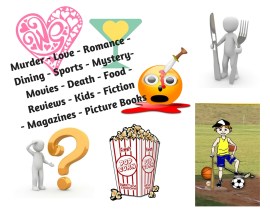
my collage

We’ve got to know which niche/genre we’re writing for. Whether writing a short story, magazine article, self-help, children’s book, or an advertisement knowing the niche is important. That doesn’t mean you are locked in that niche/genre forever. Many successful authors switch genres when they switch projects. 

So, what have I learned about understanding my niche?

  1. Identifying my niche isn’t enough.
  2. To attract a reader it’s important to confirm their perception of the world.
  3. The reader must feel that I “get” them. That I understand them.
  4. My writing should reflect or challenge what my audience believes, thinks or wants.
  5. Always remember, their perception is their reality. 
  6. Read everything I can find about my niche! 

Do you enjoy writing in a particular niche?

Where do you find information about your niche?

Do you have any tips that help your writing rise above others in a genre/niche?

Talk to me, the lights on and comments are now open.

You can find me on Twitter @jeancogdell, Facebook at jean.cogdelland Amazon.com, stop by and say hey! Please remember to click and share this post with your Twitter peeps and Facebook fans.

Want to know more, click the links below.

Buzz Your Book: Niche Marketing Techniques for Every Author By 
Writers Who Pick A Niche Get Better Results by
How to find your fiction-writing niche By David Cathcart
Tap into This Psychological Driver to Create the Ultimate Message  by
101 Niches to Write About by 

How to write less and say more

Today’s letter in the A-Z Challenge L.

L = LESS

Love Every Single Sentence

Less

or Trash It!

How to write less & say more is not as easy as it sounds.

As I’ve mentioned before, I’m a talker. It’s been said that I can hold a conversation with a wall. I will admit that I’ve rarely met a person with whom I can’t engage in conversation.

However, one of the things I’ve learned is that my conversation skills don’t necessarily carry over on to the written page. See, how I rambled on and on when a few words would’ve worked just fine? Don’t roll your eyes at me. I’m not the only long-winded writer on the internet.

Now back to LESS.

6 things I’ve learned about Less is More.

  1. I still need to cut more flab in my writing.
  2. Brevity is my friend and Clarity my sister they keep me grounded.
  3. Waste words waste the reader’s time.
  4. Get to the point and quickly.
  5. Big words will not make me sound smart.
  6. Lead with active voice and cut passive.

How close to the bone can you cut before your writing falls apart?

Do you need to write less and say more?

Talk to me, the lights on and comments are now open.

You can find me on Twitter @jeancogdell, Facebook at jean.cogdelland Amazon.com, stop by and say hey! Please remember to click and share this post with your Twitter peeps and Facebook fans.

Want to know more, click the links below.

Write Less, Say More: The Power of Brevity by Danny Rubin

Embracing Brevity: How to Write Less and Say More by MUSTAFA KHUNDMIRI

Saying It Short: A ‘Less Is More’ Guide to Effective Writing by Tom Hynes