Do you know how to Vlog?

Continuing on with the A-Z Challenge:

V=Vlogging

I’ve always prided myself on having an open mind. Always ready to learn something new. But for the love of all that is holy! I just don’t know if my brain can hold much more.

Our family used to have a running joke, don’t ask Mom – she doesn’t remember. To which I would respond, “I remember the important stuff. Unimportant stuff, I delete from my mind to make room for new stuff. A person only has so much gray matter.”

Okay, enough ranting. Deep breath and back to the subject at hand.

Vlogging? What the hell is Vlogging?

I’m still struggling with Instagram and Facebook.

And don’t get me started on learning about formatting a book for IngramSpark and CreateSpace. Geeze, bleed area. Picky, picky. Understanding the terms and applying them are two different things.

Now a writer should know how to produce an infomercial about writing or what people are saying about writing or about books or….

A Vlog is, a short, entertaining commercial, that doesn’t look like a commercial. Click to tweet.

It’s all about subtle product placement.

What do you do on a Vlog for 1 to 3 minutes? Anything you want.

Talk, dance, read, go about your day, or write as if no one was watching. It doesn’t matter what you do as long as you don’t bore people to death.

In this instant, YouTube generation, they will click on to the next video before you can shout, “Wait.”

Yes, this year, I made room in my ever shrinking brain for something new called a Vlog.

Here’s what I learned.

  1. Vlogs are located on Youtube.
  2. Make your Vlog easy to find. Link it to your blog.
  3. A Vlog should last 1 – 3 minutes.
  4. You and your books are the product in a Vlog.
  5. A Vlog, above all else, must be entertaining.
  6. It is another media to introduce you to your readers.
  7. Like a blog, you must update your Vlogs and post consistently.
  8. Make it fun. If you don’t enjoy watching your video, no one else will. 
  9. Last but not least, I learned I’m not ready for Vlogging.

Have you jumped onto the Vlogging social media train?

Do you think Vlogging is a good platform for writers?

Talk to me, the lights on and comments are now open.

You can find me on Twitter @jeancogdell, Facebook at jean.cogdelland Amazon.com, stop by and say hey! Please remember to click and share this post with your Twitter peeps and Facebook fans.

Great information dead ahead!

Vlogging Anyone? By Jennifer Wilkov

Vlogging For Writers By LEENA NORMINGTON

What’s a Book Vlogger? By Shari Stauch

Why Authors Should Be YouTubers – Vlogging Advice From Lindsay Mead

Do you want more imagination in your writing?

I do!

I think that is probably the worst thing anyone could say about my writing is that it’s unimaginative. That it needs more imagination. That it’s hard to see, to envision or whatever.

Guess you’ve figured out what my word for the A-Z Challenge and the letter is:

U=Unimaginative

un·im·ag·i·na·tive

adjective meaning – not readily using or demonstrating the use of the imagination; stolid and somewhat dull.

uninspireduninventiveunoriginaluncreativecommonplacepedestrian,mundaneinstitutionalordinaryroutine, matter-of-fact, humdrum,workadayrun-of-the-mill, by-the-numbers, hackneyedtritehoary

Well, you get the idea.

thoughtful-788284_640

I don’t know about you, but if someone called my writing unimaginative, I’d probably give up writing altogether. Or at least, until I recovered from my hangover.

Imagination isn’t my problem. It’s showing that imagination in story form.

A story is pictures made of words.

You guys have taught me a lot about using words to paint a story. Thus saving my poor readers from pages filled with dull, boring and unimaginative letters.

Lessons learned:

  1. Don’t rely just on adverbs. Could end up all purple.
  2. Don’t rely just on adjectives. Ditto with number one.
  3. Nouns and verbs can paint a vivid picture too. And anchors the reader doing double duty.
  4. Sometimes less is more. Remember TMI (too much information.) Not every sneeze, look, shrug and smile must be recorded.
  5. Colorful language doesn’t always translate into a colorful story. Make sure the hell bells, and fuck that’s fit the story.
  6. Pretend you’re describing a scene to an alien. Would they understand what’s happening?

So let me ask…

What other tips can you give me to avoid writing unimaginative prose?

Talk to me, the lights on and comments are now open.

You can find me on Twitter @jeancogdell, Facebook at jean.cogdelland Amazon.com, stop by and say hey! Please remember to click and share this post with your Twitter peeps and Facebook fans.

Great reading dead ahead!

Imagination with Powerful Descriptions by Creative Writing Now
Fiction Craft and Story by Rachelle Gardner
Writing: Where Less Can Be More by JAMI GOLD


PS

Almost Ready

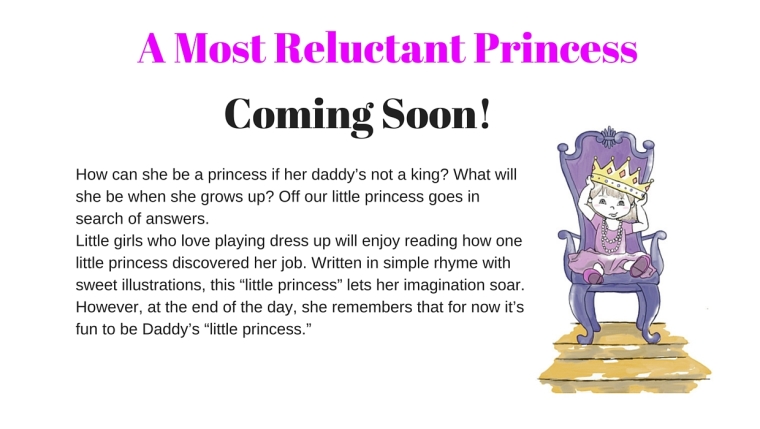
Coming Soon! (1)


How to find the right title for your novel

No? Me neither. 

But, with the help of a lot of wonderful bloggers and writers who post “how-to” info, I’m getting better at understanding what makes a good title.

My word for the A-Z Challenge and the letter T is:

T=Title

Over the past year, I’ve read a lot about titles and to be honest, I think I chose the wrong one for Tryouts for Ben. It was number five or six in a long list of working titles. But by the time that little book was ready I couldn’t decide and I all but flipped a coin. Not a good way to pick a final title.

So, how do you pick a good title for a book?

Most writers start with a working title, and usually as the story progresses other titles begin to emerge. Or so I’ve heard.

Other writers, probably more seasoned pros, know at the on-set just the perfect title. That would not be me. Just in case you were wondering.

English: This is a modification of File:200902...
Photo credit: Wikipedia

If a picture is worth a thousand words, a title is worth much more.

Whether shopping at B&N, browsing the stacks at the library or scanning Amazon for something to read, the first thing I read is the title. I often reject a book based on the title.

Your title is the first hook of your book.

Doesn’t matter if it’s a romance novel, thriller or children’s book, the title is the first words of your book a person reads.

fish-311721_640

Okay, just what have I learned this past year?

  • As always, I still try to learn from my mistakes. (Ben)
  • Research is important for the title too.
  • A title should peak the reader’s curiosity. Get their attention.
  • It needs to give the reader an idea of what’s inside the cover.
  • Don’t get locked in with the “working title.”
  • Look inside the story for words, phrases or names that might serve as a title.
  • Don’t try to be too clever.
  • Try the title out on friends and family. Some will like it, others won’t but listen to the why of both.

For your reading pleasure, head to the bottom of this post and find out more about picking the best possible title for your book. 

How do you pick a title?

Do you have any suggestions on picking a better book title?

Do tell!

Talk to me, the lights on and comments are now open.

You can find me on Twitter @jeancogdell, Facebook at jean.cogdelland Amazon.com, stop by and say hey! Please remember to click and share this post with your Twitter peeps and Facebook fans.


PICKING THE PERFECT BOOK TITLE by Tucker Max
4 Things To Keep In Mind When Choosing A Title For Your Book by Karen Woodward
ADVENTURES IN TITLING by Kate Kearns

How to write a good story

Or tell a good story–

What’s the difference?

One makes you a writer the other is…

My letter for the A-Z Challenge 

S= Storytelling

To me telling a story is easier than writing one. And because I enjoyed telling stories I thought writing stories would be a cinch. 

Well, I’ve learned the joke was on me.

Yep, after reading the many great writers and bloggers floating around on the web, I realized how little I knew about writing.

I wasn’t even sure I understood the English language. Somewhere I evidently missed a class or a dozen.

At least, Y’all weren’t into shaming and finger-pointing. Instead, you stepped up, taught and encouraged me as well as any other writer who asked for help.

So what did I learn about storytelling?

  • Telling a story is easier than writing a story. Telling a ghost story as you sit around a campfire is different that writing a ghost story on paper. For one thing, it’s harder to scare the pee out of a group of third graders without a flashlight. 
  • I gotta have a theme. But leave the preaching the Reverend at First Baptist. If my readers want a sermon, they’ll attend church not read my book.
  • A good plot equals good action. However, that doesn’t mean I need to blow the hell out of everybody that doesn’t get shot. Just means a story needs to move forward and wrap up satisfactorily .
  • Know my characters – intimately. So much so, that by the time my book is ready for publication I’m sick of them. Why? Because if I don’t know and understand my characters, how can I expect the readers to understand them?
  • I better know what the hell I’m writing about, and where the story is going, especially if I want to explain these things to my reader.

One last thing.

If you enjoy listening to books on tape check out these online  Storytelling blogs as a way to get back in touch with the art of storytelling.

Story Center 

National Storytelling Network 

Story Teller

Do you find telling the story easier than writing the story down?

Do you think there is a difference in storytelling and writing a story?

Talk to me, the lights on and comments are now open.

Below are links to read more tips on better reading your way to better writing.

You can find me on Twitter @jeancogdell, Facebook at jean.cogdelland Amazon.com, stop by and say hey! Please remember to click and share this post with your Twitter peeps and Facebook fans.

For Tips on how to write that story better check out these writers:

Short Story Tips: 10 Ways to Improve Your Creative Writing by Dennis Jerz and Kathy Kennedy
What Makes a Good Story? By Aaron Shepard
Want to Improve Your Writing Skills? 5 Fun Storytelling Exercises to Try By Marian Schembari