How to keep things moving at breakneck speed

With “inciting incidents.”

As writers, we’ve all heard of the “inciting incident.” And that we need them to keep the story moving and the reader turning the pages. But, how many, where do you place them in a novel?

research 2

I’m in the beginning stage of fleshing out my patchwork outline for a new WIP, you know all that boring stuff. Like research.

In the midst of all this research, a really good post caught my eye. “Get Your Story off to the Right Start: The Inciting Incident,” by Bryan over at Become a Writer Today.

  • You need an Inciting Incident in the First Quarter of Your Story to avoid boring the reader. And we know what a boring reader does… stops reading.
  • Change Your character’s life. Better or Worse change the character is changed. They can never go back to the way things were because of this inciting incident.
  • Awaken a Hidden Desire in Your character. When writing the inciting incident of your story, find out what your character wants (or sub-consciously) and then use the incident to awaken a desire in them.
  • Work Backward from your climax, from your ending. From the moment of the inciting incident, everything should build towards the climax.

Click on the link above to read Bryan’s complete article.

My questions of the day!

Do you use more than one inciting incident?

Or is one big inciting incident enough?

Do share I’d love to hear from you!

Click to write me or contact me on Twitter @jeancogdell, Facebook at  jean.cogdell and Amazon.com, stop by and say hey! The lights are on and I’m waiting.

Please remember share this post with your Twitter peeps and Facebook fans.

Do you know how to compile a mobi document without a TOC?

First, let me say if you have a better way – PLEASE – let me know.

A few posts back, I talked about my disappointment with KKBC (Kindle Kids Book Creator.)

The end results were lovely but limited. Very limited.

For instance, once a book is up on KDP (Kindle Direct Publishing) you can click on the book and download a .mobi file to use.

But for a book made with KKBC, this doesn’t work. Yes, the file downloads but not everyone can open it on their devices.

That means sending this mobi file, from KDP, to reviewers may leave you embarrassed. Why? Because the reviewer may not be able to open it. Now, I confess I have no idea how to predict who can open it and who can.

So what to do?

While not perfect for picture books, Scrivener provided a mobi file I could live with.

I’m sure most of you know that Scrivener will compile your document into an ebook file. So I won’t bore you with how to compile an ebook. But if you want to compile a picture book or a short manuscript “without” a table of contents these tips might help.

Most children picture books don’t need a TOC.

I spent hours listening to videos and reading blogs before I finally figured out how to avoid the automatic contents page in Scrivener.

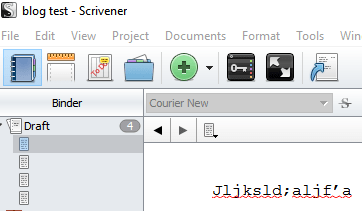
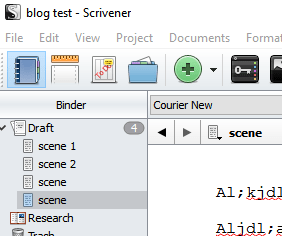
The only way, I found, to avoid having a TOC show up in the compiled mobi file was to delete the names listed on the scenes or chapters leaving that space blank.

toc 3           TOC 2

So there you have it. I used this process for making and downloading a mobi version of my picture book that I can send to reviewers.

Is it as nice or pretty as the KKBC book? No, but it does give me a file I can email out for review.

I hope some of you amazing computer gurus and Scrivener pros step up and give us your expertise.

What do you think?

Any other suggestions?

Was this post clear as mud? 

Keep reading for great reading on Scrivener TOC!

I’d love to hear from you! Click to write me or contact me on Twitter @jeancogdell, Facebook at  jean.cogdell and Amazon.com, stop by and say hey! The lights are on and I’m waiting.

Please remember share this post with your Twitter peeps and Facebook fans.
Scrivener – How To Compile With Style

Scrivener for Mac Tutorial: How to turn a list of topics into a table of …

Scrivener Quick Tip: Building an eBook Part 1

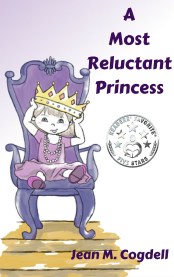
5 star cover ebook

How to make progress on your novel without writing

I’ve started a couple of novels and always, I mean always, reach a point where I’m stumped.

What next? I let it rest. I research. I go to another project. But above all, I keep writing and still fretting over the unfinished novels.

This past week I read an interesting post on other things a writer can do that will keep the story moving, without writing. You heard right. Without writing! Thank you   for a great list.

Number one we’ve all heard of and I’ve done.

  • Make a collage or vision board.
    • This is a great visual aide but while fun didn’t do much to move my story forward. Pinterest is a great place for a vision board or collage.collage


But I’ve got to admit I never thought about the others on her list. It amounts to walking in your characters shoes.bridal-636018_640

  • Bathroom habits.
    • Never thought about my character’s bathroom habits. Have you?
    • Do they wax, or shave? Shower or bubble bath? Blow dry or curls air dry?
  • Fragrance.
    • Try wearing your characters favorite fragrance. Is it Vanilla, Floral, Musk, Lavender, Old Spice…man-948205_640
  • Location.
    • Visit, either physically or virtually.
  • Music.
    • Fill your house with music, not the kind you enjoy but the music your character enjoys.
  • Beverage
    • If you’re a coffee drinker but your character enjoys tea, switch for a day or two.
    • Martini or cold beer? Try the one you envision your character drinking.
  • Colors.
    • Wear the characters favorite color.
    • Add something in your bedroom or living room in their favorite color.
  • Vehicle.
    • Go to a showroom and sit inside the type of vehicle the character drives.
    • Take a test drive.
    • Ask a friend.
    • Need a tractor go to a farm
    • Historical novel, visit a historical society.
  • Purse/Pockets
    • Look in your purse, handbag or pockets. Do you carry any of the things your character would? Maybe you can add something.
  •  Fashion
    • Clothes horse?
      • What type?
        • Vintage, couture, bargain?
  • Bedroom
    • Is there a way you can change something in your bedroom to mimic your characters? Maybe add soft bulbs in the lamps. Switch sheets to scratchy bargain 300 thread count or spring for luxurious Egyptian Cotton or sexy satin.
  • Computer
    • Literate or a newbie
    • Laptop or Ipad
  • Handwriting
    • Practice writing as you think they might with a beautiful script or an ugly chicken scrawl using your right or left hand.
  • Entertainment
    • What does your character do for entertainment? Watch TV, go to the movies, read books, newspapers or magazines? Whatever the answer is you need to follow in their footsteps here too.

Number 19 on her list was  my favorite.

  • Possessions.
    • She suggested the writer should think about the possessions of the character and search for something they might like to own. To find a small article to use for inspiration as you write.

What a great idea! Thrift shops here I come!

As I wrote my own list, more and more ideas popped into my head.

What about you? 

Can you add another tip to the list?

Any of these tips new to you?

Do you use any of these techniques in your writing?

Will you use any of them in the future?

Which one did you like the best?

To read the entire article look for the link at the bottom of this post.

I’d love to hear from you! Click to write me or contact me on Twitter @jeancogdell, Facebook at  jean.cogdell and Amazon.com, stop by and say hey!

The lights are on and I’m waiting.

Please remember share this post with your Twitter peeps andFacebook fans.

Writing: 20 Ways to Make Progress on a Self-published Novel Without Actually Writing by


What if you could change the world?

That’s what I try to do every day in the make-believe worlds I create. The author has complete control to move everyone and everything around at their whim. We use phrases like “what if” to push on to the next scene, or action and wham. We change the world.

Ah, too bad it’s not so easy in real life. 

That simple phrase spurs the imagination and wakes us to possible changes or new directions. When we write using the “what if” well it makes the reader think and wonder. It makes the reader turn the page and continue reading.

Saturday morning I read a wonderful editorial piece in the Dallas Morning News that made me think that kept me reading to the last word. And that my friends, is what good writing is all about.

One day I hope to write as well as Randy Lee Loftis, “People have never defeated physics by arguing. They never will. In other news…”

Pour yourself another cup of coffee, tea, a glass of wine or, grab a tall cold beer, sit back, relax and read the art of writing “what if” in this thought-provoking piece by an amazing writer.

In Other News by Randy Lee Loftis

events

Tell me, have you ever been grabbed by a particular piece of writing?

By a particular writer, good or bad?

Talk to me in the comments section or you can write me or reach me on Twitter @jeancogdell, Facebook at  jean.cogdell and Amazon.com, stop by and say hey!

The lights are on and I’m waiting.

Please remember share this post with your Twitter peeps andFacebook fans.