How to improve your writing with these simple rules

Do you feel like rules stifle your creativity?

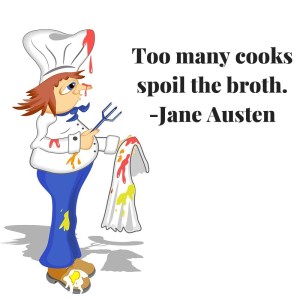
That too many rules, like cooks, ruin the outcome?
Well, following the rules need not be confusing. Thanks to Barbara Delinsky boils down the rules of writing to 5 easy to understand and follow.

  1. Homework.
    • Research will help you write about everything. Thank goodness for Google. Personally, I love researching a new topic. Too bad I get lost in all the cool info.
  2. Likable characters.
    • Everyone loves to cheer on the heroine and boo the villain. Don’t overdo their attributes.
  3. Scene purpose.
    • Write scenes that don’t distract or slow down your story.
  4. Move it, move it.
    • Keep the pace moving forward. Readers prefer heart-stopping speed to eloquent prose.
  5. Edit, and edit some more.
    • Edit everything. Edit typos, flow, context, inconsistencies, repetition, and boredom.

There you have it, my take on How to Write Like Delinsky: Five Rules Of Writing by Barbara Delinsky

Head over and read Barbara’s post and let me know what you think.

Do you follow her rules?

Have one of your own to add?

Are you a rule breaker or follower?


PLEASE TAKE ANOTHER MINUTE AND LOOK ME UP ON SOCIAL MEDIA BY CLICKING ON THE LINKS BELOW.
AND STOP BY JEAN’S WRITING ANYTIME, I’LL LEAVE A LIGHT ON. 

FacebookTwitterAmazonPinterestStumbleupon 


How to overcome doubt, and procrastination

Do you procrastinate?

I’ve written several times about letting life get in the way of writing. And uh, no, I haven’t figured out how to shut out the world and write. But, I’ve found a few writers with suggestions to help me with this problem. (Fingers crossed.)

Does doubt dog your writing?

Every damn day. Doubt I will ever finish, doubt no one will read my book, and doubt that anyone will really ever give a damn. Thank God for writers who share their doubts and fears too. I learn something every day. Don’t let doubt kill your dreams.

Do you find excuses to NOT write?

Yep. I sure do. I mean a good movie can help a writer, don’t you think? I just received a new book and can’t wait to read it, 2 days later I’m still engrossed in someone else’s story. Well, I guess it’s time to give up the excuses, again.

“We are so scared of being judged that we look for every excuse to procrastinate.” – Erica Jong 

Maybe it’s simply the act of sitting down and starting that is stopping you, not your talent.

Thanks to a few good writers for help in overcoming:

  • Write even if you don’t want to. (Put writing in the same category as a chore. Someone has to wash the dishes, right?)
  • Accept writing is not easy. (If it were easy, everyone would write.)
  • Admit your book may not be the next Great American Novel. (But then again it might.)
  • Remember no one can write like you. (Thank God, there’s only one of me.)
  • Don’t worry about what other people think. (They don’t use all their brain anyway.)
  • A comfort zone is a rut. (Climb out and write your truth.)

Now go read the entire posts (links below) and find a few more tips to help you ‘Get Er Done.’  For those of you who said, get what? Click the video. LOL

HOW TO GET PAST EXCUSES AND FINISH YOUR WRITING! BBryan Hutchinson 

How to stay focused on writing one book By Rob Bignell

Write More Easily: Understanding, Embracing and Moving Beyond Resistance By 

Okay, your turn:

What helps you get up and get writing every day?

How do you overcome writer’s doubt?

Share your favorite tip to get things done.

PLEASE TAKE ANOTHER MINUTE AND LOOK ME UP ON SOCIAL MEDIA BY CLICKING ON THE LINKS BELOW.
AND STOP BY JEAN’S WRITING ANYTIME, I’LL LEAVE A LIGHT ON. 

FacebookTwitterAmazonPinterestStumbleupon 


How to make your reader, laugh or cry

The answer is simple, the application not so easy.

Do you enjoy books that make you want to laugh, cry or throw things? 

Maybe, you prefer a story that gets your motor running. Or a Steven King type horror book after which sleep is never gonna happen.

If we enjoy these gut-reactions books, so do our readers. But the question is how to grab a reader and twist until they laugh or scream.

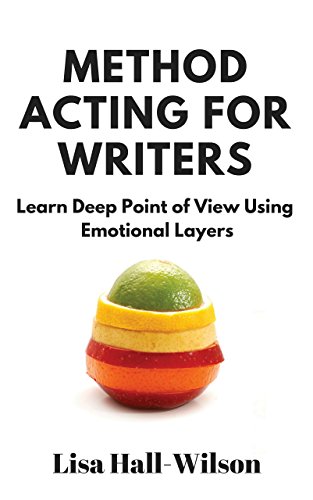
Thanks to Lisa Hall Wilson for a terrific post on how to do just that. Make our readers feel something visceral, something real.

According to Lisa, a story needs 3 things to elicit feeling in a reader.

  • Emotional trigger
    • A reaction that catapults us without thought.
    • Often quick-sudden and irrational.

We all have a trigger that makes us react, starts the waterworks, makes us want to scream,  run or fills us with shame. A fictional character is no different. Find that emotional trigger in your character.

  • Specificity
    • Specific sensory details and descriptions ratchet up the tension.
    • Don’t skimp on details that will pull your reader deeper into a story.
    • Choose wisely which incidents to describe in detail, don’t bore reader.

Sensory means relating to sensation or the physical senses; transmitted or perceived by the senses. Adding enough details that a reader can relate to will paint a picture.

  • Authenticity
    • Although your character is fictional, how they act must ring true.
    • The reader should be able to understand the reactions.
    • The reader doesn’t have to agree with the characters actions but does need to understand why.

Means: real or genuine, not copied or false, true and accurate, made to be or look just like an original. Knowing a character in depth and relaying that info on the written page isn’t easy. Dig deep and help the reader understand the why.

Click and read her entire post and find the truth within your fiction.

3 Ingredients You Need To Make Readers Feel By Lisa Hall-Wilson

Do you have a tip for invoking emotion in a reader?

How do you handle truth in fiction?

Did you find anything helpful in Lisa’s post? What?

Click on the image and read an excerpt of Lisa’s book.

PLEASE TAKE ANOTHER MINUTE AND LOOK ME UP ON SOCIAL MEDIA BY CLICKING ON THE LINKS BELOW.
AND STOP BY JEAN’S WRITING ANYTIME, I’LL LEAVE A LIGHT ON. 

FacebookTwitterAmazonPinterestStumbleupon 


LinkConnector Validation

Urgent, What you need to know about writing

A recent article by author ALEXANDRIA Constantinova explains what sets successful books apart from the masses. If you want to have a competitive edge your story must have…

URGENCY!

Dictionary defines URGENCY as:

  • urgent character; imperativeness; insistence; importunateness.
  • urgencies, urgent requirements or needs.
extreme urgency baby meme
Courtesy of WEKNOWMEMES

Last week I wrote about seizing the reader. (click to read.) In that post, I talked about using the dramatic pause to capture a reader’s attention.

But, we don’t just want to capture a readers attention, we want to keep it and get them to share with enthusiasm. And that usually happens through word of mouth. Think back to the last book you couldn’t stop talking about…

What compelled you to tell others about the book?

Something made you want others to share in your love and excitement for the book. But what did that book have that others did not?

Even if you want to take the traditional publishing road, consider agents receive thousands of submissions each year. And of those thousands, agents usually take on between three – ten new authors a year. (Click to read more.) And should you choose to self-publish, your competition is thousands released every day. So we must write better than ever.

What I learned from Alexandra:

  • URGENCY must be woven into the fabric of the plot, character, and voice of your novel. It can’t be just slapped in as an afterthought.
  • No matter the genre, URGENCY must evolve naturally from the characters, in the plot and circumstances.
  • URGENCY, it is the Voice itself that makes the audience want to continue reading.
  • To achieve a well-rounded story, I should try and incorporate URGENCY in as many areas as possible.
  • Let my characters deal with conflicts in their way, NOT in the way I might deal with a conflict. This should prevent me from writing the same thing over and over. Hmm.
  • Any section where a reader’s attention might wander is where I need to add URGENCY.

There are 3 basic areas where URGENCY should be included:

  1. Plot which must include conflict.
  2. Character development.
  3. Voice

Places to add URGENCY…

  • First sentence
  • Last sentence of the first paragraph
  • Beginning and end of each chapter
  • Beginning and end of each section, IF divided into sections
  • When changing narrators or Points of View
  • Periodically throughout the novel
  • End of a novel IF it is in a series

I can’t stress it enough, head over and read Alexandria’s article. It’s jam-packed with information on how to write a stand-out, attention-getting, well-rounded novel.

Click this link and keep reading…

Urgency in Fiction, Part One BY ALEXANDRIA

OKAY, Y’all know I want to hear from you.

Tell me what you think about adding urgency to your story. 

Agree, or disagree? 


PLEASE TAKE ANOTHER MINUTE AND LOOK ME UP ON SOCIAL MEDIA BY CLICKING ON THE LINKS BELOW.
AND STOP BY JEAN’S WRITING ANYTIME, I’LL LEAVE A LIGHT ON. 

FacebookTwitterAmazonPinterestStumbleupon