How to write the best opening scene?

How much action is too much?

Writing action in a story isn’t always easy.

At least not for me. Because I’m currently struggling with this very thing. The first couple of chapters have to be right or I can’t move on. I go back and forth trying to get that balance just right.
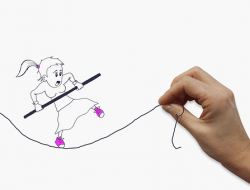
Writing the balance between action and story in those first few chapters is crucial to hooking a reader. Too much action and I risk exhaustion, too little and I may bore the reader to death.

So where does a story really begin?

I recently read a great article about starting at the true beginning of a story.

“When you are looking for your story’s true beginning, look for the first event that changed your character’s path.” 

Ms. Keller reminds us that we need to connect dots with a change to move our story forward.

Great advice for this writer.

So, seems I need to find the catalyst that changed things for my protagonist and start there. Link events with other changes to propel the story forward. Hmmm. This may be doable.

After I read her article a couple more times or maybe six, maybe I’ll get it. LOL

Click on the link to Ms. Keller’s post below and see what you think.

Opening Action: how to make it work By M.L. Keller

Are her tips helpful to find the true beginning of your story?

Do you think it’s important to write action in the beginning?

Are you guilty of writing too much backstory too soon?

Got any tips for writing a terrific first chapter?

Please share your thoughts!

YOU CAN FIND ME ON SOCIAL MEDIA BY CLICKING ON THE LINKS BELOW.
AND DO STOP BY JEAN’S WRITING ANYTIME, I’LL LEAVE A LIGHT ON. 

FacebookTwitterAmazonPinterestStumbleupon

Do you know if you need one yet?

An ISBN for your book?

This question pops up again and again.

Free vs Purchased? Which is better?

Image source

I know authors who use both. The answer is a personal one and each #writer must decide what fits the goal for their book. But whatever you do, don’t take the decision lightly.

I purchased my ISBN from Bowker and published through both IngramSpark and Createspace.

Here is why:

  • I wanted hard copies, not just ebooks.
  • A purchased ISBN belongs to me. Giving me all publishing rights and control.
  • Allows me to publish under my imprint. (Second Act Press, not Amazon or Createspace.)
  • My books are available to my local library through the IngramSpark catalog. (Love seeing them there.)
  • Brick and mortar stores can order them. (One-day fingers crossed.)

But, I did not purchase an ISBN for the ebook version.

Here is why:

  • It is my understanding that ebooks use an ASIN which is provided by KDP free.  (Y’all correct me if I’m wrong on this.)
  • The ebook distribution does best through Kindle  (In my humble opinion.)

Virginia Anderson goes into a great more detail about the ins and outs of ISBNs in a recent blog post. So, head over and read her article before you decide to buy or not buy one for your book.

Help! Do I Really NEED an ISBN? by VS Anderson

Have you decided what you need for your book?

Did you buy an ISBN or use a free one?

Did you use a publishing service to handle this?

Did you find the process complicated?

Will you do it differently next time? How?


Waiting on your comments, please leave me one. 

And don’t forget to go over and “like” my Facebook page at Facebook at jeanswriting . Or to connect with me, click the “write me” tab. Don’t forget you can follow me on StumbleUpon,  on Twitter @jeancogdell , and Amazon.com.

Please stop by and say “hey!”  I’ll leave a light on. 

Do you have a favorite point of view?

In what POV do you write?

Which do you prefer, 1st, 2nd or 3rd?

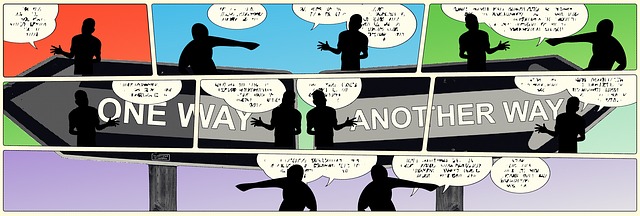
one-way-street-1317579_640
Image source

I find that most of the time I gravitate toward 1st, especially when writing children’s books. But sometimes I let the character pick.

Sound crazy? Sometimes I think so. But if I start out in one POV and it doesn’t flow, gets difficult, I change to another. This gives me a different perspective. Let’s me see my characters from a different angle. Often times, my first instinct was right and I go back to the original POV and see what stopped the action. Usually, it wasn’t the POV it was something else that needed fixing.

Doing this exercise helps me see what needs adjusting. Where I went off the rails. I’m not saying one is better than the other because I write in both. To me, the story and the characters determine which POV  I use.

What I like/dislike about 1st and 3rd POV:

  • I like the intimacy of 1st.
    • This can be a two/edged sword.
  • The objectivity of 3rd.
    • Not into the omnipresence/God-like view.
  • Freedom of being all knowing in 3rd.
    • The responsibility of being all knowing.

So I guess that means there is no right or wrong point of view. But how to decide? Me, I let my characters show the way.

Do you think a writer should stick to one POV in all of their stories?

How do you decide which POV to use?

Want to know more about Point of View? Click on the links below.

I love comments, so tell me what you think about POVs. 

Go here to “like” my Facebook page. Facebook at jeanswriting To connect with me, click the “write me” tab or follow me on StumbleUpon,  on Twitter @jeancogdell , and Amazon.com, stop by and say hey! The lights are on, and I’m waiting.

Please remember to share this post with your Twitter  peeps and Facebook fans.

3rd Person vs. 1st Person – Which Is Best? – Novel Writing Help

What Point of View Should You Use in Your Novel?  (First Person? Third Person?) By: 

First or Third? by  TARA K. HARPER

How To Write Better Stories: Red Herrings and More Tension

I love how Dan is taking these books apart. If like me, you are writing a mystery this post will be invaluable.

Keep reading!

I’m using Harry Potter and the Chamber Of Secrets to show examples of great storytelling that you can use in your writing. The transition from chapter 11 to chapter 12 is a split scene really…

Source: How To Write Better Stories: Red Herrings and More Tension