If you want to submit, it’s important to know the rules

It’s been a long while since I submitted anything for a literary publication. As I’ve posted in the past, life gets in the way too many times and distracts me from #writing. This year I hope to do better. After setting my goals for the rest of the year, I need to lie down. Whew.

But back to submitting stories or articles. Check out the following post and…

Know the rules , stay organized.

Don’t get locked out when you submitt!
If you want to submit to publications, know the rules.

Connie Jasperson explains how to use Submittable and how to track your submissions. Keep reading and get to submitting that great story.

I’m a member of several author groups who regularly meet in online chat-rooms to talk about the craft. Every member of these groups are published authors, some traditionally, and some Indie. Many are hybrid, with work both traditionally and Indie published. Much of what we discuss involves the problems we face in developing marketing strategies. […]

via #amwriting: submissions: discovering who wants them and how to manage your backlist — Life in the Realm of Fantasy

Have you submitted anything recently? If not why?

Do you think submitting is an important part of being a writer?

Talk to me – I love reading your comments.

Please head over and “like” my Facebook page at Facebook at jeanswriting . Or to connect with me, click the “write me” tab. Don’t forget you can follow me on StumbleUpon,  on Twitter @jeancogdell , and Amazon.com.

Please stop by and say “hey!”  I’ll leave a light on. 

Want to know why you need to leave a review?

Do you know why this is important?

I mean really important?

It helps a writer? Yes, of course. But there is more to it than that.

When we eat out, we leave the wait staff a tip. Even if the service is lousy, we leave a tip. Might be small, but we leave something behind. The staff worked hard to provide the meal, and our tip our acknowledgment. We may never return to that restaurant again, but that’s okay.

The same thing holds true for a book. The author works hard to produce a product for readers to enjoy. Some will enjoy the story more than others, but everyone should leave behind a tip (review.) Short and sweet, or long and eloquent, leave a review it doesn’t matter.

Don’t know what to say? Here’s a tip: read what others have said and to get ideas, to prime your thoughts into your own words.

Don’t have time to write a wordy review? Click on the stars but leave behind that tip with a one or five star review.

Image Source

Remember to let the author know you read their book. The best way to do that is to write a review. Leaving your footprints in the sands of Amazon and Goodreads is important.

Image Source

What has kept you from leaving a review in the past?

Was it fear? Didn’t like the book? Didn’t know what to say?

Think you could leave a short review now?

Talk to me – I love comments.

Please head over and “like” my Facebook page at Facebook at jeanswriting . Or to connect with me, click the “write me” tab. Don’t forget you can follow me on StumbleUpon,  on Twitter @jeancogdell , and Amazon.com.

Please stop by and say “hey!”  I’ll leave a light on. 

Keep reading for more about reviews!

Book Reviews: Why They’re So Important to Authors

Why the Right Book Reviews are So Important for Authors

HOW IMPORTANT ARE BOOK REVIEWS?

To delete now or later that is the question.

One question of so many!

question-1015308_640
Image source

Last week I read a post by one of my fav authors What Am I Working On? Glad You Asked…. His post got me

My internal editor is never quiet.

I go back over and over a chapter, too many times I’m sure before I can continue. Makes my writing process slow as molasses.

What was it about Dan’s post that caught my eye?

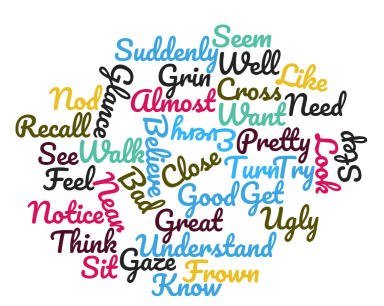
Crutch words. Or some of you may know them as filler words.

crutch-words

Dan let his manuscript rest for a year before beginning the editing process and culling out crutch words. Now that’s what I call discipline.

It’s not bad to use these words. They make great place holders for an idea, thought or dialog. However, too many a story makes me look more of an amateur than I am. Don’t know about you but I want my book to appear as polished as possible.

  • So just how do we find crutch/filler words? See, told you I had more questions.
    • Use a word counter to find words used too often as well as adverbs and repeated phrases. Look at the numbers. As all accounts know, numbers don’t lie.
  • How do we replace them? And with what?
    • After you locate the offending words/phrases, decide if a word adds or detracts to your sentence/paragraph. If the story isn’t altered by deleting the words, then you are on the right track.
  • Why should we change them? 
    • Crutch/filler words make our writing lazy. They detract from the flow and crisp dialog. And in some cases, are down right irritating to the reader.

Writers Helping Writers has a great tip sheet of crutch words. [PDF]Crutch Words – Writers Helping Writers. Check out their website for additional writing tools and books.

So tell me, am I the only writer that gets bogged down with editing too soon?

Do you edit as you go or wait as Dan did?

Are you able to silence your internal editor and get the job done?

Sorry if I sound like a two-year-old with all the questions but I’ve got a curious mind. LOL

As always I’ve listed a few articles at the bottom of this post to aid your process.

Leave me a comment – I love comments.

Please head over and “like” my Facebook page at Facebook at jeanswriting . Or to connect with me, click the “write me” tab. Don’t forget you can follow me on StumbleUpon,  on Twitter @jeancogdell , and Amazon.com.

Please stop by and say, “hey!” I’ll leave a light on. 

Keep reading!

How Crutch Words Are Holding Back Your Writing

How to Identify your Crutch Words and Highlight Your Style

Discover the truth about writing that best-seller

According to Florence Osmund, writers need to separate truth from myth on the road to becoming a successful writer.

What a relief to read that Ms. Osmund also learns the hard way, by doing. That’s me. Doing things wrong about six ways to Sunday and re-doing them again. Makes writing exhausting.

Isn’t it great when authors share their experiences in hopes of helping struggling writers like myself? I think so.

writer

So what did I learn from her article?

  • I need to find an editor for my WIP sooner than later.
    • Apparently several. Just one won’t do.
    • Your best friend may mean well but you get what you pay for. So bite the bullet and pay for a professional.
  • That being in control is a two-edged sword.
    • But, hey I’m a control freak.
  • No one enjoys marketing.
    • What a relief, thought I was the only one.
  • Writing a “best seller” is about as easy as threading a camel through the eye of a needle.
    • Wishing won’t make it so.
    • Good thing I enjoy writing.
  • Writing is not cheap.
    • I’m beginning to see that.
  • Promote, promote and promote the book.
    • Again with the marketing.
  • Price matters.
    • Like Goldilocks, not too high, not too low but just right.

Go and read her article at The Book Designer. Here’s the link: 

Four Truths and Four Myths That Every New Novelist Should Know

Any of these truths new to you?

Leave me a comment and tell me what you think.

Go here to “like” my Facebook page. Facebook at jeanswriting

To connect with me, click the “write me” tab or follow me on StumbleUpon,  on Twitter @jeancogdell Facebook at jeanswriting and Amazon.com, stop by and say hey! The lights are on, and I’m waiting.

Please remember to share this post with your Twitter  peeps and Facebook fans.

Images by Pixabay.com

I