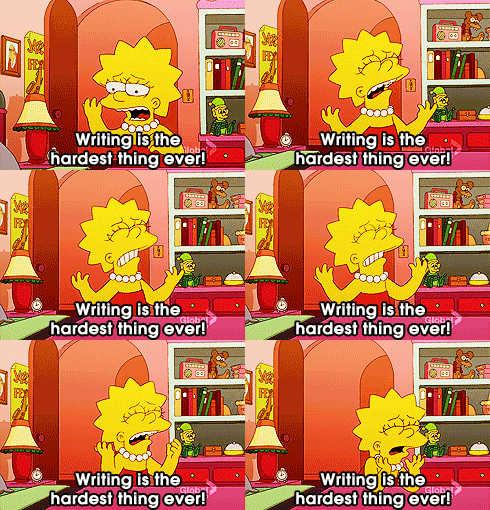
Do you feel lost and unsure what to do next?

Happens to me every time I finish a big project!

Like the  A-Z Challenge that just wrapped up on April 30th. 

Nothing to do but wait as I sit biting my nails and waiting for my proof from IngramSpark.  I hate waiting. Now, I know what you’re gonna say– start something new and start it fast. But, I’m tired. Aren’t you? 

Reading blogs, commenting, posting, writing and pushing toward a deadline is exhausting. Part of me wants to open a carton of ice cream, turn on NetFlix and veg. 

But no rest for the wicked. So, here I am typing away and trying to motivate myself to move forward on another project.

What are you going to start now that the  A-Z Challenge has ended?

Back to blogging or have you started a new manuscript?

I’d love to hear about your latest WIP, do tell!

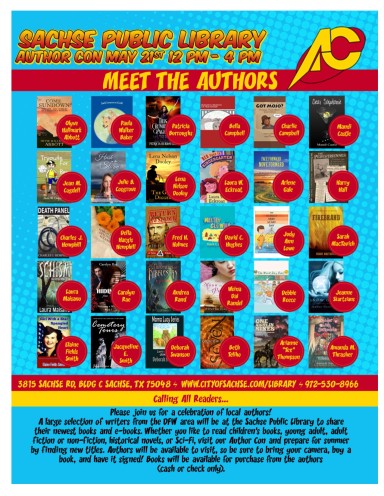
If you’re going to be in my neck of North Texas, be sure, stop by the Sachse Library and say hello at the Author Con on May 21st.

Author Con Flyer

In the meantime, the lights on and comments are now open.

You can find me on Twitter @jeancogdell, Facebook at jean.cogdelland Amazon.com, stop by and say hey! Please remember to click and share this post with your Twitter peeps and Facebook fans.

Do you know how to write like no one cares?

Like no one will read what you write? 

Continuing on with the A-Z Challenge:

W= Write

I know, I know that is easier said than done. But if you can pretend for just a little while and write whatever the hell you want I think the results might surprise you.

Writing the draft sets the writer free. Later during the editing and rewrite process comes the time to cut and care. 

This past year I finished a second children’s book and learned:

  • Pull up those big girl panties and write whatever the hell you want, because no one cares as much as you do.
  • Writing is hard if it were easy everyone would write a Best Selling Novel.
  • So might as well write whatever you want and forget about Best Seller Lists. Odds are not gonna happen.
  • Don’t worry about word count, not in the beginning. 
  • Write whatever you want because no one will read and reread  it as much as you.
  • Write whatever you want, but hire an editor.
  • Editors are a writer’s friend. Never publish without one.
  • Ditto on Beta Readers.
  • Don’t torture yourself about your writing. Your family’s got that covered.
  • Write for the love of writing, not for that first royalty check. Of course, dinner at Mickey D’s is a nice way to spend it.

Well the A to Z Challenge is over, sorry I didn’t make it to the finish. XYZ will have to make it another day. Congratulations to those who bravely persevered. 

It was wonderful to meet new people and once again learn new writing tips!

Thanks everyone for stopping by and talking.

The lights on and comments are now open.

You can find me on Twitter @jeancogdell, Facebook at jean.cogdelland Amazon.com, stop by and say hey! Please remember to click and share this post with your Twitter peeps and Facebook fans.

Great information ahead!

Better to Be a Mouse With a Backbone, Than a Lion With No Spine: On Writing Voice 
What Would Happen If You Wrote Like Nobody’s Reading? By Erin Kurup
Write Like No One Is Reading by Julie Frayn
Blog Like No One is Reading by Grechen Reiter
Write Like No One Is Reading BY: MANAL GHOSAIN –


How to find the right title for your novel

No? Me neither. 

But, with the help of a lot of wonderful bloggers and writers who post “how-to” info, I’m getting better at understanding what makes a good title.

My word for the A-Z Challenge and the letter T is:

T=Title

Over the past year, I’ve read a lot about titles and to be honest, I think I chose the wrong one for Tryouts for Ben. It was number five or six in a long list of working titles. But by the time that little book was ready I couldn’t decide and I all but flipped a coin. Not a good way to pick a final title.

So, how do you pick a good title for a book?

Most writers start with a working title, and usually as the story progresses other titles begin to emerge. Or so I’ve heard.

Other writers, probably more seasoned pros, know at the on-set just the perfect title. That would not be me. Just in case you were wondering.

English: This is a modification of File:200902...
Photo credit: Wikipedia

If a picture is worth a thousand words, a title is worth much more.

Whether shopping at B&N, browsing the stacks at the library or scanning Amazon for something to read, the first thing I read is the title. I often reject a book based on the title.

Your title is the first hook of your book.

Doesn’t matter if it’s a romance novel, thriller or children’s book, the title is the first words of your book a person reads.

fish-311721_640

Okay, just what have I learned this past year?

  • As always, I still try to learn from my mistakes. (Ben)
  • Research is important for the title too.
  • A title should peak the reader’s curiosity. Get their attention.
  • It needs to give the reader an idea of what’s inside the cover.
  • Don’t get locked in with the “working title.”
  • Look inside the story for words, phrases or names that might serve as a title.
  • Don’t try to be too clever.
  • Try the title out on friends and family. Some will like it, others won’t but listen to the why of both.

For your reading pleasure, head to the bottom of this post and find out more about picking the best possible title for your book. 

How do you pick a title?

Do you have any suggestions on picking a better book title?

Do tell!

Talk to me, the lights on and comments are now open.

You can find me on Twitter @jeancogdell, Facebook at jean.cogdelland Amazon.com, stop by and say hey! Please remember to click and share this post with your Twitter peeps and Facebook fans.


PICKING THE PERFECT BOOK TITLE by Tucker Max
4 Things To Keep In Mind When Choosing A Title For Your Book by Karen Woodward
ADVENTURES IN TITLING by Kate Kearns

How to write a good story

Or tell a good story–

What’s the difference?

One makes you a writer the other is…

My letter for the A-Z Challenge 

S= Storytelling

To me telling a story is easier than writing one. And because I enjoyed telling stories I thought writing stories would be a cinch. 

Well, I’ve learned the joke was on me.

Yep, after reading the many great writers and bloggers floating around on the web, I realized how little I knew about writing.

I wasn’t even sure I understood the English language. Somewhere I evidently missed a class or a dozen.

At least, Y’all weren’t into shaming and finger-pointing. Instead, you stepped up, taught and encouraged me as well as any other writer who asked for help.

So what did I learn about storytelling?

  • Telling a story is easier than writing a story. Telling a ghost story as you sit around a campfire is different that writing a ghost story on paper. For one thing, it’s harder to scare the pee out of a group of third graders without a flashlight. 
  • I gotta have a theme. But leave the preaching the Reverend at First Baptist. If my readers want a sermon, they’ll attend church not read my book.
  • A good plot equals good action. However, that doesn’t mean I need to blow the hell out of everybody that doesn’t get shot. Just means a story needs to move forward and wrap up satisfactorily .
  • Know my characters – intimately. So much so, that by the time my book is ready for publication I’m sick of them. Why? Because if I don’t know and understand my characters, how can I expect the readers to understand them?
  • I better know what the hell I’m writing about, and where the story is going, especially if I want to explain these things to my reader.

One last thing.

If you enjoy listening to books on tape check out these online  Storytelling blogs as a way to get back in touch with the art of storytelling.

Story Center 

National Storytelling Network 

Story Teller

Do you find telling the story easier than writing the story down?

Do you think there is a difference in storytelling and writing a story?

Talk to me, the lights on and comments are now open.

Below are links to read more tips on better reading your way to better writing.

You can find me on Twitter @jeancogdell, Facebook at jean.cogdelland Amazon.com, stop by and say hey! Please remember to click and share this post with your Twitter peeps and Facebook fans.

For Tips on how to write that story better check out these writers:
Short Story Tips: 10 Ways to Improve Your Creative Writing by Dennis Jerz and Kathy Kennedy
What Makes a Good Story? By Aaron Shepard
Want to Improve Your Writing Skills? 5 Fun Storytelling Exercises to Try By Marian Schembari