Do you want to rise to the top?

Don’t we all!

Today’s letter in the A-Z Challenge N.

N = Niche

With all the thousands, no, millions of writers, bloggers, vloggers and other social media gurus submitting something every day how do we rise above the noise? How do we stand out and rise above all the others?
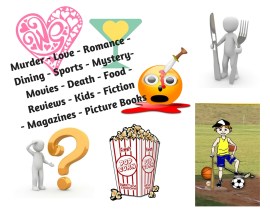
my collage

We’ve got to know which niche/genre we’re writing for. Whether writing a short story, magazine article, self-help, children’s book, or an advertisement knowing the niche is important. That doesn’t mean you are locked in that niche/genre forever. Many successful authors switch genres when they switch projects. 

So, what have I learned about understanding my niche?

  1. Identifying my niche isn’t enough.
  2. To attract a reader it’s important to confirm their perception of the world.
  3. The reader must feel that I “get” them. That I understand them.
  4. My writing should reflect or challenge what my audience believes, thinks or wants.
  5. Always remember, their perception is their reality. 
  6. Read everything I can find about my niche! 

Do you enjoy writing in a particular niche?

Where do you find information about your niche?

Do you have any tips that help your writing rise above others in a genre/niche?

Talk to me, the lights on and comments are now open.

You can find me on Twitter @jeancogdell, Facebook at jean.cogdelland Amazon.com, stop by and say hey! Please remember to click and share this post with your Twitter peeps and Facebook fans.

Want to know more, click the links below.

Buzz Your Book: Niche Marketing Techniques for Every Author By 
Writers Who Pick A Niche Get Better Results by
How to find your fiction-writing niche By David Cathcart
Tap into This Psychological Driver to Create the Ultimate Message  by
101 Niches to Write About by 

Want to know how to market that kick-ass book?

Today’s letter in the A-Z Challenge M.

M = Marketing

I had a hard time deciding which word to choose. Writing is filled with lots of M words. Midpoint, a big problem for me and lots of writers. Muse, real or mythical? Major and minor characters. Well, you get the point.

Me too! That’s why I choose the word marketing.

Because I’m terrible at selling. And maybe I’m not the only one who wants to know how to succeed at marketing my books.

We struggle to write a story, novel or in my case a children’s book and then what? Whether the author goes the traditional or self-publish route, marketing is a big issue.

Here’s what I’ve learned this past year about marketing.

  • Writing a kick ass story does not make the world beat a path to your Amazon page.
  • Writers need to promote their own books.
  • Write a good logline and elevator pitch. Be ready to spill it at every opportunity.
  • Develop an online platform.
  • Make your book easy to find and easy to buy.
  • Keep links current.
  • Write articles that tie your book to current popular interests.
  • Stay involved in Social Media. I know it’s time-consuming but a must.
  • Create a press release and submit locally and online.
  • Submit your book for pre-release reviews.
  • Have a launch party.
  • Talk to any and everyone about your book.

Did I do all of this? No. Like I said I’m not very good at this marketing stuff. But I’m trying to get better.

What tips and tricks did you use to market your book?

Did they work?

Are you good at marketing your own work? Or are you like me and struggle tooting your own horn?

Talk to me, the lights on and comments are now open.

You can find me on Twitter @jeancogdell, Facebook at jean.cogdelland Amazon.com, stop by and say hey! Please remember to click and share this post with your Twitter peeps and Facebook fans.

Want to know more, click the links below.

20+ Free Press Release Distribution Sites 
71 Ways to Promote and Market Your Book by Kimberley Grabas
How to Market a Self-Published Book by Paul Jarvis

How to write less and say more

Today’s letter in the A-Z Challenge L.

L = LESS

Love Every Single Sentence

Less

or Trash It!

How to write less & say more is not as easy as it sounds.

As I’ve mentioned before, I’m a talker. It’s been said that I can hold a conversation with a wall. I will admit that I’ve rarely met a person with whom I can’t engage in conversation.

However, one of the things I’ve learned is that my conversation skills don’t necessarily carry over on to the written page. See, how I rambled on and on when a few words would’ve worked just fine? Don’t roll your eyes at me. I’m not the only long-winded writer on the internet.

Now back to LESS.

6 things I’ve learned about Less is More.

  1. I still need to cut more flab in my writing.
  2. Brevity is my friend and Clarity my sister they keep me grounded.
  3. Waste words waste the reader’s time.
  4. Get to the point and quickly.
  5. Big words will not make me sound smart.
  6. Lead with active voice and cut passive.

How close to the bone can you cut before your writing falls apart?

Do you need to write less and say more?

Talk to me, the lights on and comments are now open.

You can find me on Twitter @jeancogdell, Facebook at jean.cogdelland Amazon.com, stop by and say hey! Please remember to click and share this post with your Twitter peeps and Facebook fans.

Want to know more, click the links below.

Write Less, Say More: The Power of Brevity by Danny Rubin

Embracing Brevity: How to Write Less and Say More by MUSTAFA KHUNDMIRI

Saying It Short: A ‘Less Is More’ Guide to Effective Writing by Tom Hynes

KISS, And the Writing is Easy

Today’s letter in the A-Z Challenge K.

kiss-686587_640

K= KISS

Keep It Super Simple

Fooled you didn’t I?

We’ve all heard the acronym KISS but have you thought about applying it to your writing?

“The bigger the issue, the smaller you write. Remember that. You don’t write about the horrors of war. No. You write about a kid’s burnt socks lying on the road. You pick the smallest manageable part of the big thing, and you work off the resonance.” ~ Richard Price

Here is a challenge.

Take a piece you’ve written and cut every third sentence. Or cut the word count by one-third. Can you do it and keep what is truly important?

“Any fool can make something complicated. It takes a genius to make it simple.”~Woody Guthrie

So, just what have y’all taught me this past year about writing short and sweet?

  1. When a reader can’t understand or follow the story, they stop reading. KISS 
  2. Life is complicated but good writing doesn’t have to be. KISS
  3. Writing tight and concise produces a better product. KISS
  4. Simple words and simple sentence structures don’t mean stupid. KISS
  5. Knowing your subject is important. Communicating that knowledge to your readers iskiss-98454_640 equally important. KISS
  6. Conveying a message in easy bite-size, succinct, and easily digestible pieces take talent. KISS
  7. Using ten-dollar words can come across as pretentious and lazy. KISS
  8. It takes work to know and write for your audience. KISS
  9. Write small, simple and get to the point. Your readers will thank you. KISS

Do you make writing harder and more complicated than it needs to be?

Have you mastered the knack of KISS in your writing?

Talk to me, the lights on and comments are now open.

You can find me on Twitter @jeancogdell, Facebook at jean.cogdelland Amazon.com, stop by and say hey! Please remember to click and share this post with your Twitter peeps and Facebook fans.

Want to know more about KISS? Click the links below.

K.I.S.S. by Rob Parnell
New Book Excerpt: Keep It Simple, But Not Simplistic by ANN HANDLEY
Keep It Super Simple By Kayla Skarbakka
KISS — Keep It Simple, Stupid! How to write about a complex subject in a simple way by Devyani Borade