Avoid costly mistakes and toss old rules

Out with the old and in with the new!

Although this may reveal more about my age than I would care to, please be polite and pretend not to notice.

Now that I’ve got this disclaimer out-of-the-way, I’ll continue.

  • Old rule, two spaces after a sentence end.
  • New rule. one space after a sentence.
  • Old rule, two lines after a paragraph.
  • New rule, one line after a paragraph.

When I first began the submission process I was rejected for formatting mistakes. Yes, sometimes your piece can be rejected not because of the grammar, spelling or plotting issues but because of formatting.

Years ago, I learned to type on a Selectric typewriter. Now this is where you politely pretend not to try to figure out how much time has passed. Anyway, I could type 90 words per minute, double space between sentences and enter a hard return between paragraphs without missing a beat. However, those rules went out the window when computers came in the door. typewriter-584696_640

I know, I know sometimes when you’re typing fast you sometimes forget not to hit the space bar twice. Even after all these years.

But it can cost you! So please check the rules on formatting for each entry before you hit send and make sure your document is in the right century.

Need more info on formatting? Keep reading I’ve added some links for your reading pleasure at the bottom of this post.

Have you ever had an entry rejected because you failed to format properly?

Ever noticed different formats for different entries?

I’d love to hear from you! Click the “write me” tab or contact me on Twitter @jeancogdell,Facebook at jean.cogdell and Amazon.com, stop by and say hey! The lights are on, and I’m waiting.

Please remember to share this post with your Twitter  peeps and Facebook fans.

Six rules for manuscript formatting.

Writing Tip #36 (a.k.a. “Don’t Space Out”)

Manuscript preparation guide


It’s exciting to discover that you’re not alone

That’s how I felt after reading other writers also have trouble describing scenes.

purple balloon-303733_640Read many of my posts? Then you know I struggle with descriptions. My writing will either be as stark and sterile as a surgical suite or purple as a five-year-old little girls birthday party. Purple prose everywhere! purple balloon-303733_640purple balloon-303733_640

My critique partner and sister is great at writing beautiful descriptions that put you right in the middle of a scene. (check out Sheila at Cow Pasture Chronicles.) But if I try to write like her, I sound like Eddie Haskell on Leave it to Beaver. Just too much.

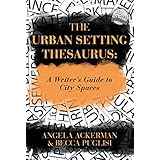
Believe me, I’ve studied every self-help book on the market. And some have helped. My favorites are the ones by  Angela Ackerman and Becca Puglisi. Like:

The Rural Setting ThesaurusThe Urban Setting Thesaurus, and The Emotion Thesaurus, plus there are several more. Be sure and check them out for really good tips on descriptions. Links at the bottom of this post

Now back to the post that gave me hope! Click and Read!!!

by Phoebe Quinn

The world is pretty visual, but I’m not. Despite my insistence that, if I had to choose, I’d rather lose my hearing than my sight, I’ve never been able to work in a visual wa…

Source: 7 Ways to Write Visually (Without Describing Everything)

I do hope you hopped over and read Phoebe’s post and realized that we don’t have to describe every grain of sand or blade of grass to engage our readers. That often less is more!

Let me know what you think.

Do you have trouble striking a balance with describing a scene or emotion?

Are you a very visual person?

Do you have a trick that helps writer like myself? Do share!

The Rural Setting Thesaurus: A Writer's Guide to Personal and Natural Places by [Ackerman, Angela, Puglisi, Becca]    The Emotion Thesaurus: A Writer's Guide to Character Expression by [Ackerman, Angela, Puglisi, Becca]   Product DetailsEmotion Amplifiers by [Ackerman, Angela, Puglisi, Becca]

Click on image to read FREE book preview!

Do you know how to develop memorable characters in a story

Hope you’re not tired of character development yet.

Because I’m still learning and my characters aren’t quite where I want them.

pen-spinning-976930_640

So y’all be sure and send me all the help you can. I need it.

The tips I learned today are:

  • Don’t write characters that blend into the background.

Whether fictional or real-life they must be three dimensional. What lead up to specific actions and life choices in the story?  By understanding their beliefs, education, values, background, and physical attributes the reader will understand their behavior.

By understanding their beliefs, education, values, background, and physical attributes the reader will understand their behavior.

  • Reveal their character.

In other words, reveal the character of your character. Does your character cheat, steal, or are they a giver, helper and lover. Show the reader their traits. What makes them tick. Let those traits develop over the course of the story. A person’s character is developed when tested.  The stakes and the consequences of the events must be high enough to be worth the reader caring about. Will they rise to the occasion or utterly fail? They either have it or they don’t.

  • Follow the passion.

Finding your character’s obsessive passion is crucial. Make their desire intense. Whatever your character wants or needs, make them care passionately about it.

  • Journal.

Now I wasn’t too sure about this tip but the more I read the more I became convinced. Q Lindsey Barrett might be on to something. She suggests that when writing the character’s biography and description you also record their rituals, and habits. She reminds us that crafting enduring characters is hard, time-consuming work. Don’t I know it!

  • Use Character Traits To Create Narrative Tension.

Use your character’s deepest desire by preventing him from having it. Want’s riches, then have his business collapse and file bankruptcy.

  • Avoid laundry lists descriptions.

Such as hair color, height, and weight. Give more explaining their temperament, confidence, and ambition.

  • Names.

Names matter but don’t be afraid to change the characters name if it doesn’t seem to fit.

This was my lesson today. Curtsey of Q Lindsey Barrett  and her post at the Missouri Review Blog – Click below and keep reading.

Writing Beyond Good: Crafting Memorable Characters

I’d love to hear from you! Click the “write me” tab or contact me on Twitter @jeancogdell,Facebook at jean.cogdell and Amazon.com, stop by and say hey! The lights are on and I’m waiting.

Please remember to share this post with your Twitter  peeps and Facebook fans.

How to avoid murdering your career

Ever feel like you are strangling a story to death?

I feel your pain. Really, I do. Sometimes I think my WIP needs to be put out of my misery.

delete key.png

So, let’s all avoid the paper shredder. Because there’s help by – 10 Career Killers by David McFarland Story Doctor.

Here is what I learned from reading 10 Career Killers.

  1. Critics don’t buy books. Don’t write like a professor, write for your reader.
  2. Idiots don’t buy books either. Don’t dumb down your writing.
  3. Develop a wide range of topics. Don’t be a one-hit wonder. Don’t become bland.
  4. Keep up with technology. Learn to speak. Don’t let fear of the unknown stop you.
  5. Be thankful when fans or critics point out things that need changing. Then do it.
  6. Keep writing. Don’t let success kill your talent.
  7. Invest and save. Remember the law of gravity. What goes up must come down.
  8. Focus on your writing. Don’t let outside forces suck up your time.
  9. Figure out what to write and how to market it. Don’t rely on others to make you rich.
  10. Remember the rules of kindergarten and play nice. Don’t burn any bridges.

I usually have a favorite when I read a list of writing tips, but picking just one of these is hard. If I had to pick, I’d pick #3. Why? Because I love all genres and mediums. I love e-books, movies, YouTube, and apps. To me, technology is fun. I can enjoy reading everything from a Steven King novel, a children’s picture book to the latest Vampire YA.

David goes into a lot more detail in his post. After you’ve clicked and read the entire thing, be sure and let me know what you thought. 

Which of his writing tips do you relate to?

Got another tip to avoid killing a writing career? Do share.

I’d love to hear from you! Leave a comment or click the “write me” tab or you can contact me on Twitter @jeancogdell,Facebook at jean.cogdell and Amazon.com. Just do stop by and say hey! The lights are on and I’m waiting.

Please remember to share this post with your Twitter  peeps and Facebook fans.