What you can do with old stories?

Submit that story, even if published elsewhere.
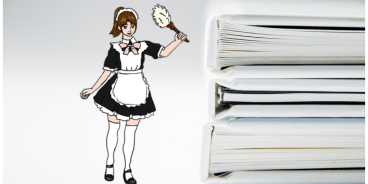
Now you can dust off those great stories and send them to a new home. Again and again.

And I’ve got just the list for you!

That’s right, there are publishers that accept reprints. So, if you’ve got a story you would like to see published again.

Check out this article…

25 Literary Journals that Accept Reprints by Emily Harstone

Do you have a great story stuck in no-mans land? 

Have you tried resubmitting a published story before? 

Are you going to try to go for a reprint?

Or do you think every story should be one and done?

PLEASE TAKE ANOTHER MINUTE AND LOOK ME UP ON SOCIAL MEDIA BY CLICKING ON THE LINKS BELOW.
AND STOP BY JEAN’S WRITING ANYTIME, I’LL LEAVE A LIGHT ON. 

FacebookTwitterAmazonPinterestStumbleupon 


Want to know how to shorten the road to novel publication?

Try your hand at writing Flash. 

You heard right. Writing Flash can ease the way to publication.


For one, writing snippets of fiction can help you finish that novel and make much-needed contacts in the industry.


Have you written a good flash piece? Submitted it for publication? Print or eZine? 

BECCA PUGLISI from Writers Helping Writers,  article link below, shares 5 ways writing and submitting flash fiction can shorten the road to novel publication.

My take away on the benefits of writing flash…

  • Exposes you to editors.
  • Win or lose, contacts with industry professionals is invaluable.
  • Flash comes in many forms. Fiction, non-fiction, and memoirs.
  • Writing flash is good practice.
  • A Flash story can be expanded to a full novel.

Read Becca’s entire article and get the nitty-gritty about writing Flash stories. 

What Can Flash Fiction Do For Novel Writers?


PLEASE TAKE ANOTHER MINUTE AND LOOK ME UP ON SOCIAL MEDIA BY CLICKING ON THE LINKS BELOW.
AND STOP BY JEAN’S WRITING ANYTIME, I’LL LEAVE A LIGHT ON. 

FacebookTwitterAmazonPinterestStumbleupon 

How to brainstorm an outline easy and painless

We brainstorm ideas all the time. But what about the outline?

I have to admit, outlining a story stops my creative process cold.

Tell me to produce an outline and instant flashbacks to grade school haunt my mind. Yuck! Until now, nothing has helped my phobia of outlines.

It all starts with Brainstorming.

If you too have an adverse reaction to outlines, keep reading. Because Joanna Penn gave me the help I needed and hopefully you’ll get a few good tips to help your aversion too.

What I learned from Joanna Penn…

  • Brainstorming helps you outline. (Who knew?)
  • Think of outlining as a writing recipe. A way to organize your thoughts. (this was an AH HA moment for me.)
  • Brainstorming is throwing out ideas and seeing which ones stick. (Freeing.)
  • There are 6 different styles. (Find yours, I’m number 6.)
    • Joanna gives steps for each style.
  • Finding your specific style will help plan/outline your novel.
  • And… Bullet points are my friend. 

Click the link below and find out what style do you use to write.

Now tell me…

Which style did you relate to?

Do you outline before you write?

How do you plan a book? 


PLEASE TAKE ANOTHER MINUTE AND LOOK ME UP ON SOCIAL MEDIA BY CLICKING ON THE LINKS BELOW.
AND STOP BY JEAN’S WRITING ANYTIME, I’LL LEAVE A LIGHT ON. 

FacebookTwitterAmazonPinterestStumbleupon 


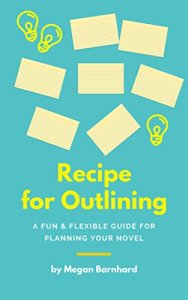
Writing Tips: Learn to Love Outlining by Finding Your Unique Planning Style by 

Click image to read an excerpt…

How to avoid murdering your voice and boring the readers

Two words – Conservational writing.

Means: writing to a friend.

So how do you write like you talk without it sounding like crap? Without putting the reader to sleep?

Well, here are a few tips, hope they help.

  • Writing to a crowd can kill your voice.
    • Instead, write as if you are writing to a friend.
    • Imagine your favorite person opening and reading your book, email or text. Will they laugh, cry or close it up unfinished?
  • Conservational writing is not writing like you talk.
    • Messy first drafts are to be expected.
    • Then, edit until your writing doesn’t sound like stuffy writing but like casual conversation.
  • Don’t write to impress
    • Write to be read.
    • Use contractions.
    • Write with common words.
  • Read blogs, contemporary novels and listen to podcasts.
    • Avoid proper English books until ready to edit.
    • Read good conversational writing.
  • Write in short sentences and paragraphs.
    • This helps avoid boring the reader to death.
  • Use the active voice.
    • Avoid passive writing when possible.
  • Read your writing out loud.
    • Record yourself reading.
    • Sounds too formal, rewrite.

Hope these tips helped a little. The articles below go into more depth, be sure and click on the links to read.

Do you imagine a friend when you write?

Do you think conversational writing applies to books, stories as well as blogs?

What tip could you add?


15 Tips for Writing in a Conversational Tone

How To Write in a Conversational Tone – A Step-by-Step Guide

How to Write Conversational Content and Make Your Readers Deliriously Happy by 

PLEASE TAKE ANOTHER MINUTE AND LOOK ME UP ON SOCIAL MEDIA BY CLICKING ON THESE LINKS. FACEBOOKTWITTERAMAZONPINTERESTSTUMBLEUPON 
AND DON’T FORGET TO STOP BY JEAN’S WRITING ANYTIME, I’LL LEAVE A LIGHT ON. 


https://www.printwand.com/blog/15-tips-for-writing-in-a-conversational-tone