Are you ready for prime time?

Well, I’m not, not yet anyway.

Getting ready to release on the world has more steps than stitches in a quilt.

Or so it seems. As I type this post with trembling fingers I’m moving on to the next step.

Beta Readers.

Someone once told me to never fear asking.

She said, “What’s the worst that can happen? You already have a no.”

I try to remember her advice. It comes in handy when I need to boost my nerve, like today.

My children’s book may not be ready for prime time yet, but after going through one editing process, it’s time to move on to the next stage­ with Beta Readers.

According to the glasgowdragonfly there is a beta reader selection methodology. Who knew? Anyway, she gives 10 things to remember when searching for Beta Readers.

If you are considering Beta Readers, I recommend you read her article before starting.

10 THINGS TO CONSIDER BEFORE USING BETA READERS

Okay, #1 – done, #2 – I’m breathing, so on to #3 – Searching for independent feedback.

Because you guys were so helpful with cover suggestions, I’m turning to you again.

I’m looking for Beta Readers who have children, or grandchildren between the ages of 6-10.

So if you can help a writer out, please email me at jeanswriting@jeancogdell.com and I’ll forward you an e-copy or a pdf copy.

Now, next I must decide what to ask.

After reading umpteen suggestions on what to ask, I’ve come to the conclusion the questions should be tailored to the project. Just like each genre, story, or writer, no size fits all.

But some of the articles I found were very helpful. But, never fear I’ll keep my request short and simple.

Questions for Your Beta Readers by Jodie Renner

In Ms. Renner’s article she gives us feedback from several of her clients. Here I think you’ll find questions to work for any genre.

Ten Questions to ask a Friend Who Just Read Your Novel by Lydia Netzer

Okay, give me a shout-out if you’re willing to read my little book. 

About my book:

The story is about a little boy named Ben, who doesn’t believe he is any good at sports. Growing up in the shadow of an older sibling, who is a star athlete, can be difficult.

At the insistence of his parents, Ben discovers he can do anything if he tries and in the process make new friends.

This book is for young readers, between the age 7-9 yrs old and Grades 2-3, who are bridging the gap between early readers and chapter books.

A Quick Guide to Beta Reader Etiquette by K.M. Weiland


Harry_reading
Thinking of asking Harry to be my first Beta.

You’ve made it this far so give me just two more seconds and hit Facebook and Twitter and share.
Thank you!
If you’re not already, I’d be much obliged if you would follow me @jeancogdell on Twitter or jean.cogdell on Facebook!

 

When do you turn loose?

When do you turn loose of your story?

I’m wrestling with this very question.

I thought I was finished with my children’s book, but now I’m not so sure.

How do you know, enough is enough?

Late at night, new ideas and thoughts slip though my tired fogged brain. Doubts that maybe, just maybe I should rewrite or at the very least add more to the book before I turn it loose.

Sigh, letting go is harder than I thought it would be. I expected to feel a sense of accomplishment. Instead, I want to tweak it more and more.

When do you know to type “The End?”

Suw Charman-AndersonCONTRIBUTOR at Forbes wrote, “the problem is knowing when to put the pen down and stop tinkering.”

When Has Your Book Finished Cooking?

This is so me!

I really like this suggestion by Shannon Deaton at

“When a writer can audibly read a draft from beginning to end without stumbling, choking, or otherwise crying, it’s okay to stick a fork in it–the writing’s done, and it’s time to enjoy the sweet desserts of publication.”

Yes reading the story aloud is important, but this made me think about reading as if I were performing. Hmm….

Read more of his article at CIRCLE AVENUE FICTION.

Over at the Positive Writer Bryan Hutchinson suggested the writer should write 10 scenarios. At first glance I thought no way, but his article got me to thinking.

How To Edit Your Book Until It’s “Finished”

He also suggested sending the manuscript out to 30 readers.

paper_the_end

So, how do you know when it’s time to release your baby out in the cold, cruel world?

You’ve made it this far so give me just two more seconds and hit Facebook and Twitter and share.
Thank you!
If you’re not already, I’d be much obliged if you would follow me @jeancogdell on Twitter or jean.cogdell on Facebook!

Does your title feed curiosity?

Do you need to change the title?

Connecting with readers is our goal as writers.

So what comes first?

The cover or the title?

A cover draws the eye to a book, but a title should tweak a reader’s curiosity enough to open that book.

I can’t thank everyone enough for their feedback on my cover. You pushed me to do better. Which got me to thinking about the title.

I’ve never been quite content with the title, and this unease led me to do a little research. Letting go of a “working title” is not easy and finding a new one even harder.

A working title gets a writer started on a story line, at least that’s what works for me. More times than not, the title or the first line is what inspires me.

But often after the story is finished, the “working title” no longer seems to fit. Like pants that are a bit too snug after a week of overindulgence, the story has out grown the title.

Here are my questions….

How do you, as a writer, produce a memorable title?

How does a writer pick a better fitting title?

When do you know the title is just right?

Be it a song, short story, flash fiction or a novel, the title must stay with the reader.

As with an old TV show, Name that Tune, will readers be able to “name that book?”

name_that_book

a) I am Malala

b) Wonder

c) Go Set a Watchman

d) 50 Shades of Grey

I know matching these 4 books is easy. Everyone remembers NYT Bestseller books. So fingers crossed our books will be as memorable!

In the following post, Carol Benedict gives 6 brainstorming ideas to help get the title just right.

How to Choose a Good Title for Your Story by Carol Benedict

Mr. Floyd writes that a good story might never be read if the title fails to do its job. He gives a few rules to guide us as well as sources to jog the imagination.

Choosing the Right Name for Your Story by John Floyd…

A staff writer over at Writers Relief, talks about just how hard coming up with a killer title is. You might want to click on this link to read the listed “elements” of a good title.

How To Come Up With A Great Title For Your Book (Or Story Or Poem) by Staff Writer.

And then there is this post by Karen Woodward. She gives us more links on how to brainstorm titles and…

4 Things To Keep In Mind When Choosing A Title For Your Book

Now, tell me…

How do you pick a title? How do you know when the title fits the body of your book?

You’ve made it this far so give me a few more seconds and share your technique for writing a killer title. Then please share on Facebook and Twitter.

Thank you!
If you’re not already, I’d be much obliged if you would follow me @jeancogdell on Twitter or jean.cogdell on Facebook!

Do you need to start over?

Or maybe you need a jump-start?

Here lately, my writing resembled a stalled car with a dead battery.

After finishing a couple of projects, I can’t seem to revive a WIP I’d put on a back burner. Seems as if the life support I’ve had this particular WIP is failing. So, I’m toying with pulling the plug, and starting something new.

But where to start?

How do I begin?

Rereading books on structure and outline can’t seem to get my engine revved and going.

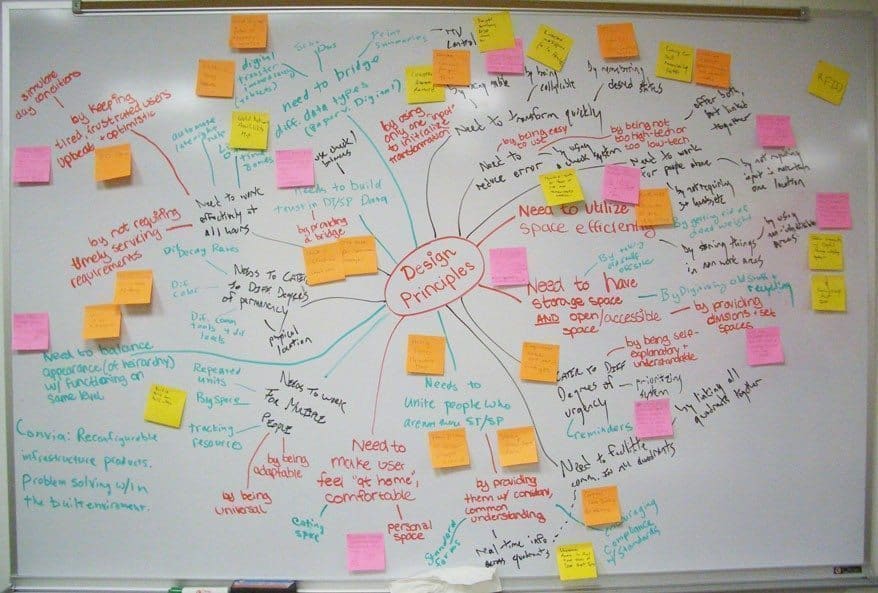
I recently read an article about Mind Mapping for writers.

Now for many of you this is not a new concept. However, I’ve been so focused on outlining that I hadn’t given much thought to Mind Mapping. Until now.

Google images

How to Use a Mind Map to Start Your Book BY

Ms. Amir refers to Mind Mapping as “The Brain Dump” method. I think that may be part of my problem. There is so much swirling around in my mind that I need to clean house. A brain dump might be the thing for me.

My first go at Mind Mapping, I used a large sheet of paper and wrote thoughts down in small squares. However, I like the idea of Post-It Notes. The small notes are flexible and easier to move around to the right location.

There are several ways to Mind Map and several programs for you Techies. In this article, Ms. Amir gives links to software programs if you want to give mapping with your computer a try.

Questions:

  • Do you think Mind Mapping might jump-start your writing?
  • Have you ever used Mind Mapping?
  • Which technique did you use?
  • Did you like the process?

You’ve made it this far, let me know what you think and two more seconds to share this post with your friends on Facebook and Twitter.
Thank you!
If you’re not already, I’d be much obliged if you would follow me @jeancogdell on Twitter or jean.cogdell on Facebook!