This easy editing tip will blow your mind

Want to know what knocked my socks off this week?

An Excel Stylesheet

Yep, good old Excel. Okay, maybe I’m impressed easier than you. 
A stylesheet can make your novel appear more professional.

Why? Because writing a massive novel is hard and keeping track of names, places, hyphens and more can get confusing. This is where a stylesheet comes in handy. And most editors require one. Who knew? Well, turns out knowing about something and knowing how to put the information into practice is two different things.

I’ve written about stylesheets in the past but until recently I didn’t understand how to put into practice what I’d learned. But, turns out it’s not that difficult.

What you put add to a stylesheet is up to you. You can keep it simple or add a column for everything under the sun.

Stylesheet purpose? 

To prevent mistakes that stand out like a pimple on your nose.

Ever read a book and a name changed midway? Cathy, Kathy, Kathie or Katy? Glaring mistakes like that will pull your reader out of the story in a flash.

I’m compiling my stylesheet as I write. This will help me find where an unusual word, phrase or name first appeared. When I’m ready to rewrite or edit, my stylesheet will help keep everything consistent.

No matter your genre, this can be an invaluable tool.  Fantasy, keep those made up countries and goblin are spelled correctly. Historical, names and places may have been spelled different a hundred years ago.

Want to know how easy it is to mess up? Even in this short blog post, I wrote stylesheet as one word in some places and as two words in other. Good grief! Now imagine catching that mistake in a 70,000-word novel.

Here is a snapshot of my writing stylesheet.

When my book is finished, I’ll print out my spreadsheet and refer to as I edit. Easier than trying to remember, flipping back and forth through a document. At least I hope so.

Why compile a stylesheet as you write?

Connie Jasperson said it best in a terrific post.

“I learned this the hard way. Making a stylesheet for a book after it has been written is a daunting task, and most editors will ask you for one when they accept your submission. Some editors refer to this as the ‘bible’ for that manuscript because all editorial decisions regarding consistency will be based on the spellings and style treatments you have established for your work.” Click here to read the entire post.#amwriting: ensuring consistency: the stylesheet, 2/14/2018 BY Connie J. Jasperson

Want more? Check out this article. Stylesheets—The Setup and the Benefits, July 12, 2011 by Beth Hill

Want to get really geeky? Read Chicago Manual of StyleChicago Manual Of Style Guidelines (Quick Study), or the Associated Press’s Stylebook (available on Kindle Unlimited.)

Okay now tell me, please…

Do you use stylesheets?

Have you used one in the past?

Do you think a stylesheet will help you avoid mistakes?

Had you heard about stylesheets before today?

I HOPE YOU TAKE A MINUTE AND FOLLOW ME ON SOCIAL MEDIA, JUST CLICK ON THE LINKS BELOW. I’LL LEAVE A LIGHT ON.

FacebookTwitterAmazonPinterestStumbleupon

What is the best secret to writing something original?

Use a formula.

Yep, you heard me right. Sounds contradictory I know. Why? Because we are creatures of comfort and formulas work.

I mean, who doesn’t have a favorite comfort food, favorite chair, a feel-good movie, or book? We enjoy the familiar.

A genre formula is a writer’s best friend.

Sticking to a genre formula lets the reader know what to expect. You know what to expect when you pick up a book by Stephen King, Patricia Cornwell, James Patterson or Danielle Steel.

Putting your own unique spin, touch or style is what makes a reader recognize your uniqueness.

Sort of like spaghetti sauce. Everyone knows it’s made with tomatoes, meat, and spices. But how the cook puts it all together will determine the flavor.


Remember, how you execute a story is what makes it unique.

  • You (the cook) make the difference.
  • Different isn’t always a good thing.
  • Readers want genre fiction they recognize and a world they feel comfortable visiting.
  • A little originality goes a long way, too much can be unnerving, even disturbing to some people.
  • Genre formulas and templates are a writers friend. Like a recipe for a cook.
  • Know the formulas.

Even if you write in more than one genre, it’s important to know and understand the formulas.

You are the secret ingredient. 

Want to know more about genres? Click on the links below.

Okay, time to talk:

Which genre do you write?

Do you know and understand the formulas?

Do you use a template for your writing? Formula outline for the genre?

Are you comfortable with one genre over others?

What do you think?

Genre Writing and Formulas By Rob Parnell
Advice for New Authors: Five sure-fire ways to find your book’s genre By Helena Halme
How To Write A Bestseller – According To The Formula By Peter Winkler


I HOPE YOU TAKE A MINUTE AND FOLLOW ME ON SOCIAL MEDIA, JUST CLICK ON THE BUTTONS BELOW. I’LL LEAVE A LIGHT ON.


How to produce a beautiful cover for your book

After writing, editing and formatting, what’s next?

Picking the perfect cover.

While no easy task, it doesn’t have to break the bank. So in case you missed this great post from Fiction University, I’m attaching a link below.

J. Kathleen Cheney gives sound advice on when and where you can design your own cover. And more important when you might want to bite the bullet and pay for a professional.

In her article, Ms. Cheney also provides links and suggestions on how you can produce a great book cover for your next project.

  • Love Canva. It’s one of my favorite programs. Very user-friendly and short learning curve. And best of all you can art for FREE or only $1.00.
  • Her idea of checking out the competition is great. That is definitely going on my to-do list for next book.
  • Get a critique on the cover from your friends, family and writing group. Big one!
  • Suggestions on how and where to look for professional covers.
  • My tip: I prefer paint.net or sumopaint.com to Adobe.

Thanks, Ms. Cheney for all of these great tips. Wish I’d read your suggestions a long time ago.

3 Ways to Get Book Covers on a Shoestring Budget By  J. Kathleen Cheney, @jkcheney 

Have you made a book cover?

What program did you use?

Or do you prefer to hire a professional?

If you aren’t at this stage yet, what do you think about the process?


I HOPE YOU TAKE A MINUTE AND FOLLOW ME ON SOCIAL MEDIA, JUST CLICK ON THE BUTTONS BELOW. I’LL LEAVE A LIGHT ON.


Are you writing hyphens in the wrong way?

Writing with hyphens can be tricky business. 

As with the word was, hyphens is another Achilles heel. Sometimes I sprinkle hyphens about like scattering rose petals at a wedding. Too many!

  Even some of the grammar programs disagree. But if you’ve ever published an ebook you’ll see what I mean. And a strayed hyphen can get left behind in print books too.
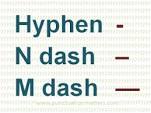
Hyphens can throw off the formatting until the reader becomes confused as to the meaning of the word. Don’t make the reader turn back pages to figure out what’s happening. 

So what to do with compound words?

Hyphen or not to hyphen that is the question.

Wikipedia

And the answer can be found in a terrific article by Connie J. Jasperson which is filled with lots of do’s, don’ts and tips. Plus, she provides extensive words to remember. This is a definite bookmark.

What did I learn about using hyphens?

  • Even when using “made up” words, tread carefully.
    • Don’t use unless your make-believe world will explode without it. (Oops)
  • Single words and don’t need a hyphen.
  • Only use a hyphen to ensure the meaning of a word.
    • Like, roundup as in a rodeo, or round up as in a review or the next highest round number
  • Some compounds are improvised to fulfill a specific need.
  • There are permanent compounds and temporary compounds. (Who knew.)
  • When in doubt leave it out. Unless…
    • Your intended meaning is clear without the hyphen, leave it out.
  • Add special words and names to your manuscript style sheet.
    • Especially made up words.
    • This will help ensure consistency in your manuscript.
  • Oh, and a hyphen is not an En dash or an Em dash.

So much is packed in her article, I encourage you to click on her link and read the entire thing.

Hyphens #amwriting By Connie J. Jasperson 


Do you use hyphens Willie-Nillie?

What do you think?

Is this all old stuff to you?


Keep reading, here is another article on using this little devil.

The Punctuation Guide, Hyphen

I HOPE YOU TAKE A MINUTE AND FOLLOW ME ON SOCIAL MEDIA, JUST CLICK ON THE BUTTONS BELOW. I’LL LEAVE A LIGHT ON.