Ah, English class 101. Ugh. Hated diagrams, homophones, spelling and confusing pitfalls of a word choice. All I wanted to do was read and write stories. You know, fun stuff.
But alas since I didn’t memorize all the hard stuff, refresher courses are required from time to time as the article byMelissa Donovan reminds me.
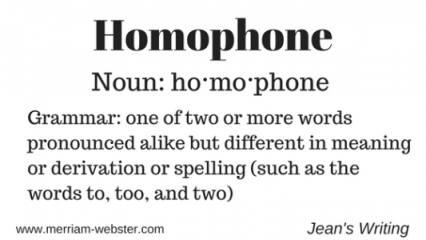
Melissa wrote a piece on the homophone compliment vs. complement. One letter (e) changes the entire meaning of the word.
To make our life a bit easier I’ve found a few links for homophones. Check these out below and bookmark them for the future. Because if you’re like me one day you’re gonna get caught with a homophone in the wrong hanging out in the wrong place.
PS:
I thank the Gods for Spell Checkbecause I’m terrible at spelling. But, do remember Spell Check programs will not pick up on homophones because they are spelled correctly. So watch out for these pesky minefields.
As usual, meet me at the water cooler and tell me what’s on your mind.
Do you remember all lessons from your English classes?
If homophones aren’t your biggest problem, what does trip you up?
As with the word was, hyphens is another Achilles heel. Sometimes I sprinkle hyphens about like scattering rose petals at a wedding. Too many!
Even some of the grammar programs disagree. But if you’ve ever published an ebook you’ll see what I mean. And a strayed hyphen can get left behind in print books too.
Hyphenscan throw off the formatting until the reader becomes confused as to the meaning of the word. Don’t make the reader turn back pages to figure out what’s happening.
And the answer can be found in a terrific article by Connie J. Jasperson which is filled with lots of do’s, don’ts and tips. Plus, she provides extensive words to remember. This is a definite bookmark.
What did I learn about using hyphens?
Even when using “made up” words, tread carefully.
Don’t use unless your make-believe world will explode without it. (Oops)
Single words and don’t need a hyphen.
I have started checking the Urban Dictionaryfor help on some words.
Only use a hyphen to ensure the meaning of a word.
Like, roundupas in a rodeo, or round up as in a review or the next highest round number
Some compounds are improvised to fulfill a specific need.
There are permanent compounds and temporary compounds. (Who knew.)
When in doubt leave it out. Unless…
Your intended meaning is clear without the hyphen, leave it out.
Add special words and names to your manuscript style sheet.
Especially made up words.
This will help ensure consistency in your manuscript.
Oh, and a hyphen is not an En dash or an Em dash.
So much is packed in her article, I encourage you to click on her link and read the entire thing.
I felt a kinship with Kelly and you will too. You may enjoy the workarounds she provides unless of course, you are one of the few Grammar Police left in the world. I hope you’ll set aside that red marker and reconsider after reading her post.
Here is my take on her 6 rules:
Ending sentences with a preposition.
Guilty, but I didn’t know this rule was attributed to Winston Churchill
Starting sentences with a conjunction.
Oh yes, guilty. This gem was apparently courtesy of teachers in the 19th century.
Sentence fragments.
Now honestly, I write like I talk. And well…
Split infinities.
This one drives me nuts. But what a relief, Kelly gives us permission to use as needed and explains why.
Who vs Whom
I love her suggestions. Just avoid if unsure. But realize the word “whom” is for formal writing.
Pronouns.
What about “they?” Turns out it’s not one but what else is a writer to use?
Click the link above to read more about Kelly’s thoughts on these obsolete grammar rules.
Questions:
Do you agree, some rules are made to be broken?
Is there another grammar rule that drives you nuts?
Are you guilty of breaking these six?
Do you have any tips to help writers with grammar rules?
Please share, let’s become better writers together.
Also, if you can please stop by my other locations and say “hey!” I’ll leave a light on.








 Even some of the grammar programs disagree. But if you’ve ever published an ebook you’ll see what I mean. And a strayed hyphen can get left behind in print books too.
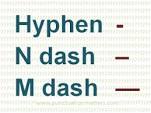
 Do you use hyphens Willie-Nillie?


 Hooray! At last, a common sense post about what to do about hard and fast rules that make no sense in this day and time.


 Jean's Writing