To delete now or later that is the question.

One question of so many!

question-1015308_640
Image source

Last week I read a post by one of my fav authors What Am I Working On? Glad You Asked…. His post got me

My internal editor is never quiet.

I go back over and over a chapter, too many times I’m sure before I can continue. Makes my writing process slow as molasses.

What was it about Dan’s post that caught my eye?

Crutch words. Or some of you may know them as filler words.
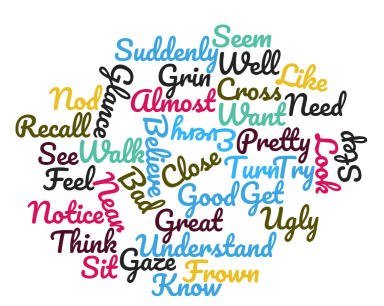
crutch-words

Dan let his manuscript rest for a year before beginning the editing process and culling out crutch words. Now that’s what I call discipline.

It’s not bad to use these words. They make great place holders for an idea, thought or dialog. However, too many a story makes me look more of an amateur than I am. Don’t know about you but I want my book to appear as polished as possible.

  • So just how do we find crutch/filler words? See, told you I had more questions.
    • Use a word counter to find words used too often as well as adverbs and repeated phrases. Look at the numbers. As all accounts know, numbers don’t lie.
  • How do we replace them? And with what?
    • After you locate the offending words/phrases, decide if a word adds or detracts to your sentence/paragraph. If the story isn’t altered by deleting the words, then you are on the right track.
  • Why should we change them? 
    • Crutch/filler words make our writing lazy. They detract from the flow and crisp dialog. And in some cases, are down right irritating to the reader.

Writers Helping Writers has a great tip sheet of crutch words. [PDF]Crutch Words – Writers Helping Writers. Check out their website for additional writing tools and books.

So tell me, am I the only writer that gets bogged down with editing too soon?

Do you edit as you go or wait as Dan did?

Are you able to silence your internal editor and get the job done?

Sorry if I sound like a two-year-old with all the questions but I’ve got a curious mind. LOL

As always I’ve listed a few articles at the bottom of this post to aid your process.

Leave me a comment – I love comments.

Please head over and “like” my Facebook page at Facebook at jeanswriting . Or to connect with me, click the “write me” tab. Don’t forget you can follow me on StumbleUpon,  on Twitter @jeancogdell , and Amazon.com.

Please stop by and say, “hey!” I’ll leave a light on. 

Keep reading!

How Crutch Words Are Holding Back Your Writing

How to Identify your Crutch Words and Highlight Your Style

Do you see yourself in the characters you write?

Would someone reading your book see you?

No, not talking about a memoir. I’m talking about the characters in your book.

Well, not sure I’d want people to think of me as a murder or a love-sick, silly woman. However, with all the blood sweat and tears that cover my manuscript, I’m sure I’ve left pieces of myself in the story.

kermit-1767617_1920

But, I think if we leave behind a tiny bit of ourselves, we can humanize even the villain. When we add some of our traits and quirks to a character it enables the reader to relate. They want to justify bad behavior they recognize in Uncle George or the wild-child they remember from their youth.

Go ahead, leave something of yourself recognizable in all the characters. After all, we are very complex creatures.

So if you see a starry-eyed optimism in one character and in another a smart-ass bitch, yep, they’re both me.bird-1773599_1280

Do you slip some of your flaws or strengths in your characters?

How about those of a relative? Ever use them as a blueprint?

Do you think this makes our characters more relatable?

Keep reading, below is some good stuff on using yourself in characters.

Leave me a comment – I love comments.

Please head over and “like” my Facebook page at Facebook at jeanswriting . Or to connect with me, click the “write me” tab. Don’t forget you can follow me on StumbleUpon,  on Twitter @jeancogdell , and Amazon.com.

Please stop by and say, “hey!” I’ll leave a light on. 

Why There Should Be a Little Bit of You in All Your Characters Guest Post by Braden Russell 

Deeper People: Putting Yourself into Your Characters 

is it narcissistic to make one of your characters yourself? 

Do you tell the truth and nothing but the truth?

As Sgt. Joe Friday admonished on Dragnet, “Just the facts, Ma’am…”

But where to stop? stop-1502026_640

I’ve researched different stuff for my book and I’m getting bogged down in the details.

Didn’t someone once say, “Don’t sweat the small stuff?” And some of this stuff is small. However, I don’t want a reader slamming me for a glaring mistake just because I didn’t do enough research.

Besides, I love research. I can get lost for hours hopping from website to website reading everything on a subject. And what do I end up with? Files, more files, notebooks and dozens of sticky notes of important information.

“Half a truth is often a great lie.” – Benjamin Franklin 

Sometimes I get too technical, too filled with the mundane details forget the magic of writing.

So here’s to remembering the magic and sprinkling my story with enough half-truths magic-184447_640that my readers are willing to suspend disbelief. Fingers crossed.


What do you think?

Are you a researcher?

Or do you write and let the facts fall where they may?

Do you think different genres call for varying degrees of research?

As usual, I’ve left some interesting reading at the bottom. See? I just love research. LOL

Leave me a comment – I love comments.

Please head over and “like” my Facebook page at Facebook at jeanswriting . Or to connect with me, click the “write me” tab. Don’t forget you can follow me on StumbleUpon,  on Twitter @jeancogdell , and Amazon.com.

Please stop by and say, “hey!” I’ll leave a light on.

How Much Research Is Too Much?

Research: When and How Much? by Evan Marshall

Fiction Writer’s Guide: How much Research is too much? 

How to Research a Novel: 7 Tips  by:

Do you think writing is more effective with a formula?

Of course! Formulas are buried in every book, movie or play. 

Take the Pixar movies! Who doesn’t love the little train that could? Or the little fish that doesn’t quit? Our hearts go pitter-patter when boy meets girl and live happily ever after. And what about the underdog who keeps plugging along until he wins. We love to cheer for Rocky Balboa, Scarlet O’Hara, the Great Ali, Harry Potter, and yell run Forest run. The list could go on to “infinity and beyond.” buzz lightyearI think you get the idea.

So what do I need to know about formulas that are repeated over and over in books and movies?

Do they work?

learn-1044078_640

Yes! They work if we understand how to apply them. How to make them ours.

Here are 22 Rules of Storytelling from Pixar to get us started.

What did I learn from these formula rules?

  • A character that I cheer across the finish line, you may boo.
  • My readers may not think basket weaving is fun.
  • Forcing a theme on my characters may not work.
  • Whatever makes my character a star, steal it for a time. hehe
  • A formula works because it is tried and true. Once upon a time….
  • KISS, (keep it simple) until I reach the end. There is always time to go back and flesh out the details second round.
  • Characters have opinions, might as well let them speak.
  • Give the readers a reason to cheer or jeer.

What do you think?

Can you spot formulas in your writing?

Is there a formula that works for you? 

When you get stuck does a formula put you back on track? 

Tell me I’d love to know!

Leave me a comment – I love comments.

Please head over and “like” my Facebook page at Facebook at jeanswriting . Or to connect with me, click the “write me” tab. Don’t forget you can follow me on StumbleUpon,  on Twitter @jeancogdell , and Amazon.com.

Please stop by and say hey! The lights are on, and I’m waiting.