Do you suffer from a fear of words?

Do you see your story in pictures or words?

Then you might be a visual writer.

After reading Nancy Friedman‘s post, I’m convinced. I’m a visual writer. Because I see glimpses of a story and then proceed to put the things I see into words. Not always an easy feat.
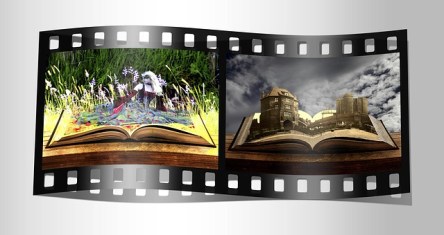
Writing pictures into words can be a problem if the writer has a fear of words.

I’m bad to write, in short, clipped sentences often failing to describe in detail what I want the reader to understand. Not good. So, I’m going to work on writing a little more prosaic.

If you ever find yourself at a loss for words? 

You might be a visual writer.

If you ever have trouble with “what comes next” in a scene?

You might be a visual writer.

If you have trouble writing specific descriptions and hope the reader “gets it?”

You might be a visual writer. (this one is so me.)

So how do I use my visual ability to convey the right words at the right time and in the right order? How do I make sure my readers can see what I see?

Practice, practice, and practice. Practice with words.

Remember readers are not psychic. They cannot see a scene unless I paint a “verbal” picture.

PS: A little trivia. Logophobia, is a fear of words, talking. Also, who knew there is a Visual Thesaurus? Cool!

Go read Nancy’s article and tell me…

Are you a visual writer or a verbal writer?

Are the right words always at your beck and call?

Or do you struggle to describe the scenes dancing in your head?

Fear of Words (and Other Writer’s Blocks) by Nancy Friedman

Talk to me – I love reading your comments.

Please head over and “like” my Facebook page at Facebook at jeanswriting . Or to connect with me, click the “write me” tab. Don’t forget you can follow me on StumbleUpon,  on Twitter @jeancogdell , and Amazon.com.

Please stop by and say “hey!”  I’ll leave a light on. 


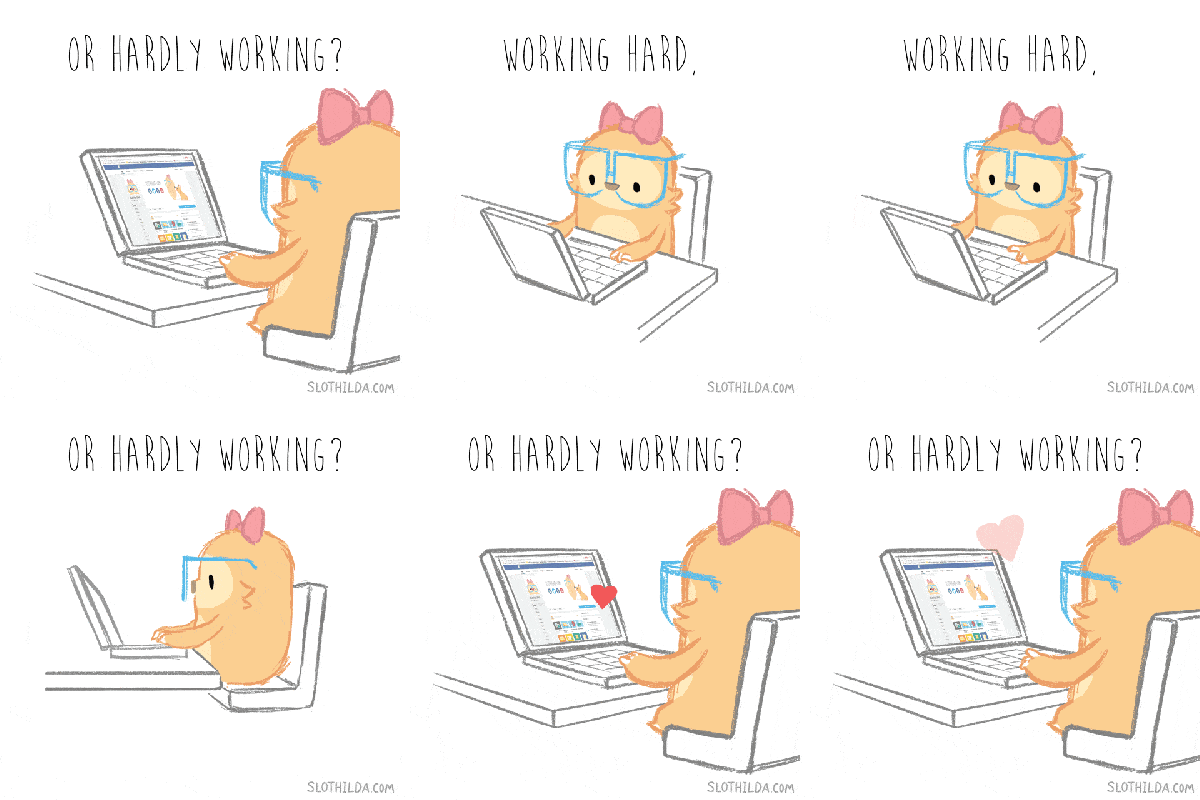
How is your day as a writer?

Do you ever have a day like this?

You know the kind. One step forward and two steps back. Come on fess up.

I’ll admit some days this is more or less how I write. LOL

Good morning! Fueling up!


Just one quick look.


Research location. Where oh where to put this story? Oh, I’d love to visit Paris. I’ll check flights. Won’t take a minute.
Time to rock-n-roll! I got this.


Need to chat with my critique partner. Just one question. My we have a lot to catch up on.


Let’s see what everyone is doing. Just one quick look.


Time to make the magic happen!
WTF did I write that for? Editing, editing, and more editing.
Maybe I need a little adaptation research.


She didn’t post that picture! On no.


Happy hour! It’s five o’clock somewhere. Tomorrow is another day. Cheers!

Hope you this brought a little fun to your week.

But do tell me. Am I wrong?

Do you write without distraction, nose to the computer?

Talk to me – I love reading your comments.

Please head over and “like” my Facebook page at Facebook at jeanswriting . Or to connect with me, click the “write me” tab. Don’t forget you can follow me on StumbleUpon,  on Twitter @jeancogdell , and Amazon.com.

Please stop by and say “hey!”  I’ll leave a light on. 
Images courtesy of Pixabay and GIPHY


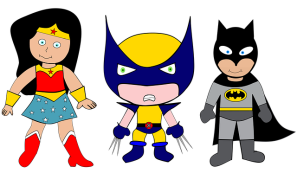
How to instantly improve your story

By putting a little zing in your writing with power words.

Super Heroes - Jean's Writing

Now I don’t mean to burst your bubble, but I’m not promising to instantly make you a NY Times bestseller. No, that’s gonna take a whole lot more information than I possess. However, should I ever be so fortunate as to ascend to such lofty heights, I’ll be in a better position to share the climb.

But back to improving. That’s where I’m at now. Tweaking and changing and learning how to better grab my readers. To that end, I’ve found a couple of terrific posts.

Use Power Words to Spice Up Every Page of Your Book or Website  by Judy Cullins

317 Power Words That’ll Instantly Make You a Better Writer  by Jon Morrow

In these articles, they write about using powerful, thought-provoking words that will not only grab but also hold the attention of a reader. Both Ms. Cullins and Mr. Morrow also provide an extensive list of “power words” that help us get started.

Words Have Power - Jean's Writing
Use the right one!

What did I glean from their posts?

  • Words have power but use the right ones.
  • Smart speakers, as well as writers, sprinkle power words without drawing attention to them.
  • Power words invoke emotion.
  • A story will be bland and dull without a few power words.
  • Not all power words are the same. Some invoke passion, others greed, fear, joy, or create comfort and curiosity.

Here is today’s challenge.

Check one of your favorite books, are power words used in the first paragraph?

Look at your current WIP, do you have power words to grab a reader?

Will adding a power word or two make the paragraph better?

What do you think?

Talk to me – I love reading your comments.

Please head over and “like” my Facebook page at Facebook at jeanswriting . Or to connect with me, click the “write me” tab. Don’t forget you can follow me on StumbleUpon,  on Twitter @jeancogdell , and Amazon.com.

Please stop by and say “hey!”  I’ll leave a light on. 

Images courtesy of Pixabay

Do we need to write a consequence for every action?

A reaction for every action? Large or small?

The short answer is yes. I think so.

Once I grasp this concept, things began going a little smoother. Now in each scene, I stop and ask what will the characters consequence be for each action.

Even the smallest of decisions can move a story forward. For instance, stopping to buy a coffee can result in meeting the right or wrong person. Turning left instead of right can result in an accident or a chance meeting.

See. Each decision your character makes must have a consequence sooner or later to drive the story to the end.

It’s simple cause and effect.

My current work in progress I’m using action-reaction to move each scene forward. Even the most mundane of things.

Such as…

  • action: she pulled her sweater tighter
  • reaction: draws unwanted attention
  • action: he seeks her out
  • reaction: love or hate, life or death?

This could go further and carry on in another chapter. And with a little luck, things will fall into place like a row of dominos.

Look at a scene in your WIP. Is there any action that could use a reaction? Even if it is ordinary, mundane and everyday stuff it might be what you need to fill in the gaps.

Read these great articles on consequences for our characters.

Consequences of Your Character’s Actions 

Writing an Action Outline

Tell me what you think.

Do you believe there must be a reaction to every action?

Can you see this helping propel a story forward?

Got any tips how you weave action and reaction into your story?


Talk to me – I love reading your comments.

Please head over and “like” my Facebook page at Facebook at jeanswriting . Or to connect with me, click the “write me” tab. Don’t forget you can follow me on StumbleUpon,  on Twitter @jeancogdell , and Amazon.com.

Please stop by and say “hey!”  I’ll leave a light on.