Posts

Do you see yourself in the characters you write?

Would someone reading your book see you?

No, not talking about a memoir. I’m talking about the characters in your book.

Well, not sure I’d want people to think of me as a murder or a love-sick, silly woman. However, with all the blood sweat and tears that cover my manuscript, I’m sure I’ve left pieces of myself in the story.
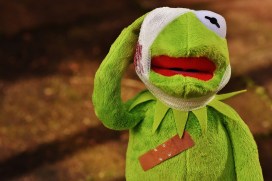
kermit-1767617_1920

But, I think if we leave behind a tiny bit of ourselves, we can humanize even the villain. When we add some of our traits and quirks to a character it enables the reader to relate. They want to justify bad behavior they recognize in Uncle George or the wild-child they remember from their youth.

Go ahead, leave something of yourself recognizable in all the characters. After all, we are very complex creatures.

So if you see a starry-eyed optimism in one character and in another a smart-ass bitch, yep, they’re both me.bird-1773599_1280
Do you slip some of your flaws or strengths in your characters?

How about those of a relative? Ever use them as a blueprint?

Do you think this makes our characters more relatable?

Keep reading, below is some good stuff on using yourself in characters.

Leave me a comment – I love comments.

Please head over and “like” my Facebook page at Facebook at jeanswriting . Or to connect with me, click the “write me” tab. Don’t forget you can follow me on StumbleUpon,  on Twitter @jeancogdell , and Amazon.com.

Please stop by and say, “hey!” I’ll leave a light on. 

Why There Should Be a Little Bit of You in All Your Characters Guest Post by Braden Russell 

Deeper People: Putting Yourself into Your Characters 

is it narcissistic to make one of your characters yourself? 

Do you tell the truth and nothing but the truth?

As Sgt. Joe Friday admonished on Dragnet, “Just the facts, Ma’am…”

But where to stop? stop-1502026_640

I’ve researched different stuff for my book and I’m getting bogged down in the details.

Didn’t someone once say, “Don’t sweat the small stuff?” And some of this stuff is small. However, I don’t want a reader slamming me for a glaring mistake just because I didn’t do enough research.

Besides, I love research. I can get lost for hours hopping from website to website reading everything on a subject. And what do I end up with? Files, more files, notebooks and dozens of sticky notes of important information.

“Half a truth is often a great lie.” – Benjamin Franklin 

Sometimes I get too technical, too filled with the mundane details forget the magic of writing.

So here’s to remembering the magic and sprinkling my story with enough half-truths magic-184447_640that my readers are willing to suspend disbelief. Fingers crossed.


What do you think?

Are you a researcher?

Or do you write and let the facts fall where they may?

Do you think different genres call for varying degrees of research?

As usual, I’ve left some interesting reading at the bottom. See? I just love research. LOL

Leave me a comment – I love comments.

Please head over and “like” my Facebook page at Facebook at jeanswriting . Or to connect with me, click the “write me” tab. Don’t forget you can follow me on StumbleUpon,  on Twitter @jeancogdell , and Amazon.com.

Please stop by and say, “hey!” I’ll leave a light on.

How Much Research Is Too Much?

Research: When and How Much? by Evan Marshall

Fiction Writer’s Guide: How much Research is too much? 

How to Research a Novel: 7 Tips  by:

Do you think writing is more effective with a formula?

Of course! Formulas are buried in every book, movie or play. 

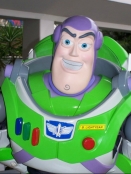
Take the Pixar movies! Who doesn’t love the little train that could? Or the little fish that doesn’t quit? Our hearts go pitter-patter when boy meets girl and live happily ever after. And what about the underdog who keeps plugging along until he wins. We love to cheer for Rocky Balboa, Scarlet O’Hara, the Great Ali, Harry Potter, and yell run Forest run. The list could go on to “infinity and beyond.” buzz lightyearI think you get the idea.

So what do I need to know about formulas that are repeated over and over in books and movies?

Do they work?

learn-1044078_640

Yes! They work if we understand how to apply them. How to make them ours.

Here are 22 Rules of Storytelling from Pixar to get us started.

What did I learn from these formula rules?

  • A character that I cheer across the finish line, you may boo.
  • My readers may not think basket weaving is fun.
  • Forcing a theme on my characters may not work.
  • Whatever makes my character a star, steal it for a time. hehe
  • A formula works because it is tried and true. Once upon a time….
  • KISS, (keep it simple) until I reach the end. There is always time to go back and flesh out the details second round.
  • Characters have opinions, might as well let them speak.
  • Give the readers a reason to cheer or jeer.

What do you think?

Can you spot formulas in your writing?

Is there a formula that works for you? 

When you get stuck does a formula put you back on track? 

Tell me I’d love to know!

Leave me a comment – I love comments.

Please head over and “like” my Facebook page at Facebook at jeanswriting . Or to connect with me, click the “write me” tab. Don’t forget you can follow me on StumbleUpon,  on Twitter @jeancogdell , and Amazon.com.

Please stop by and say hey! The lights are on, and I’m waiting.

What to do with a stubborn character

Damned if I know.

I’ve been writing, on and off for the past few months, on a novel. Working on the idea and research for much longer. I was motoring right along when all of a sudden the story began sputtering
empty fuel

Ever happen to you?

In an effort to nudge my protagonist along, I played with the outline and plot adding bits of information here and there, but she wasn’t in the mood. So I turned to my villain who was not in the mood to be evil.

drunk-1013898_640

There was nothing left for me to do but take a break, do more research, read a little, and write a few blog posts.

mud soldiersAt last, I returned to my WIP. Each sentence was like slogging through mud.


Then last week, as I was dusting our living room floor, my protagonist began whispering in my ear. She had the nerve to explain how the story should happen.

Whoa! Wait a minute!

Did she expect me to rewrite the whole damn story? Apparently. Well, to be honest, about two-thirds of it.

But, I’ve got to admit, her tale sounded a lot better than the direction I’d dragged around her butt all these weeks.

The premise is still the same. However, the antagonist is a different character, and the twist is much bigger and the bang bolder.

Why did this happen?

Here’s my theory. Over the past months of plotting, outlining, etc., I’ve gotten to know my protagonist. I mean really know her. Like we are best buds. And like best friends, she spoke up telling me what she thought. That’ll teach me to keep my distance next time. Sigh…

So here are my questions for Y’all.

  • Has this ever happened to you?
  • Why do you think this could happen?
  • Did you rewrite or persevere and keep with the original plan?
  • And isn’t it always better to go with bigger, bolder and different?

As always, at the end of this post, I’ve added terrific information for your reading pleasure.

Leave me a comment – I love comments.

Please head over and “like” my Facebook page at Facebook at jeanswriting . Or to connect with me, click the “write me” tab. Don’t forget you can follow me on StumbleUpon,  on Twitter @jeancogdell , and Amazon.com.

Please stop by and say hey! The lights are on, and I’m waiting.

WHEN A CHARACTER GOES ROGUE

Good Character Writing

6 Secrets of Writing a Novel Without an Outline