Is Your Idea Strong Enough? Story Structure Part 4

Every time I sit down to write, I ask the question, “Is my idea good enough?”

Author Kristen Lamb's avatarKristen Lamb's Blog

Screen Shot 2015-02-13 at 10.06.04 AM

Whether we are traditionally published, indie published or self-published, we must connect with readers and tell a great story. Structure is the “delivery system” for our story, so it’s wise to make it as solid as possible.

Welcome to Part IV of my Structure Series—Testing the Idea

I assume that most of you reading this aspire to be great novelists. Novels are only one form of writing and, truth be told, they aren’t for everyone. Stringing together 60-100,000 words and keeping conflict on every page while delivering a story that makes sense on an intuitive level to the reader is no easy task.

That said, all novels begin with an idea. But how do we know if our idea has what it takes to make a great novel?

Many new writers start out with nothing more than a mental snippet, a flash of a scene or a nugget of an idea, and then…

View original post 1,915 more words

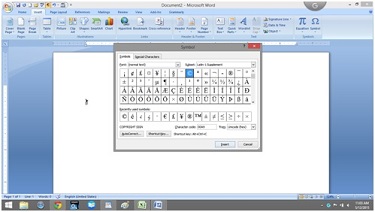
Hunting for symbols?

I use Scrivener and MS Word for my writing.

Don’t ask why, I’m just weird that way. However, Sometimes my writing flow is interrupted when I can’t remember the shortcut key for a specific symbol.

Searching through the Insert Symbol tab is like coming to a stop sign.msword

To ease my irritation a little, I made a cheat sheet and thought I’d share.

So if you are tired of searching for just the right symbol as if you’re looking for a matching pair of socks in a drawer that won’t close. Hope this helps.

Shortcut keys for symbols

Ctrl+Alt em dash
Ctrl+W Close the active window / document.
Ctrl+Z Undo an action.
Ctrl+Y Redo the last action or repeat an action.
Ctrl+S Save a document.
Ctrl+P Print a document.
Ctrl+K Insert a hyperlink.
Alt+Left Arrow Go back one page.
Alt+Right Arrow Go forward one page.
Ctrl+C Copy selected text or graphics to the Office Clipboard.
Ctrl+V Paste the most recent addition to the Office Clipboard.
Ctrl+Shift+A Format all letters as capitals.
Ctrl+B Applies or removes bold formatting.
Ctrl+I Applies or removes italic formatting.
Ctrl+= Apply subscript formatting (automatic spacing).
Alt, F, A Save As.
Alt, S, T, I Insert Table of Contents.
Alt, S, T, R Remove Table of Contents.
Alt, W, F Full Screen Reading – View > Document Views > Full Screen Reading.
Alt, W, R Ruler. View > Show/Hide > Ruler.
Alt, F, X  Exit Word.

For less commonly used keyboard combinations check out this website:

http://www.internet4classrooms.com/msword_keyboard_ibm.htm

For more Alt symbol codes go to:

http://www.alt-codes.net/

I love comments, tell me what’s happening with you and if you’re not already, please follow @jeancogdell on Twitter!

Anatomy of a Best-Selling Story 3—Opposition

This is one post I will read over and over, I’ll save it for my cliff notes file, I’ll refer to it again and again. Why? Because Kristen Lamb keeps the conflict in story structure simple.
In Anatomy of a best selling story 3, Kristen explains story structure in such simple terms even I understand.
No Conflict? No Story. Thanks Kristen, I learn something from your blog every week.

Author Kristen Lamb's avatarKristen Lamb's Blog

Screen Shot 2013-07-18 at 10.59.42 AM

Ah, structure. We are discussing the fundamentals of story. No skeleton and our story is a puddle of primordial adverb ooze. In Part One, we talked about the micro scale of fiction the scene and the sequel, cause and effect. In Part Two, we panned out for the BIG picture, Aristotelian Three-Act Structure.

Today? We talk about the essential ingredient for ALL fiction. Just like carbon is the ONE key ingredient for all LIFE, conflict is the key ingredient for ALL stories. No conflict? No story.

If you want to self-publish or indie publish, I would assume most of you want to be successfully published, regardless the format or distributor. To be considered “successfully published” we have to sell a lot of books. To sell a lot of books, we must connect with readers. That is what this series is about. Structure is how readers connect to stories. The…

View original post 2,107 more words

How to pick and choose your scenes

One of my favorite ezines now is South West Writers

In today’s email is a great article on how to figure out which scenes in your writing need trimming or maybe cutting.

How do you decide which scenes are working? 

Lorena Hughes gives a lot of information to help a writer make that decision. Hop over and read.

TRIMMING THE FAT (AKA EXPENDABLE SCENES) IN YOUR NOVEL by Lorena Hughes

Happy editing.

I love comments, tell me what’s happening with you and if you’re not already, please follow @jeancogdell on Twitter!