
How to use powerful emotional writing to engage a reader

I’ve been reading a lot about how to show what my characters are feeling.

Putting emotions on paper, in words that pull in a reader is not as easy as one might think. From lovers, friends, enemies, coworkers, monsters, and strangers all experience emotions and we need to show them to the reader.
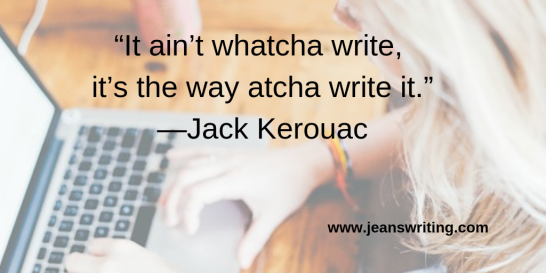
“It ain’t whatcha write, it’s the way atcha write it.”—Jack Kerouac

Luckily, there are several good writers who know just what I need to do.

A little food for thought…

  • Fear, anger, doubt, joy is universal emotions. Help your reader remember when they felt those same emotions. This enables the reader to connect with your characters.
  • There are two types of emotions. Primary and Secondary.
    • Primary is the first initial reaction, which is an unthinking, instinctive response. The Primary response often disappears as fast as it appeared, giving way to…
    • Secondary reaction.  Replacement by secondary emotions can complicate the situation, often making it difficult to understand the circumstances. For instance, fear turns to anger back to fear and then to flight.
  • Don’t forget the backstory that formed your character’s emotions. The biological, psychological and social factors led them to feel the way they do.
  • Remember to use inciting incidents and circumstances also shape a character’s emotions.
  • What is going on in the story to reinforce a character’s response?
  • What protective trait does the character have that will bring them to the other side and hopefully a good ending?

If you want to get a few great tips and examples of emotional writing, take a minute and click on these links.

The Connection between Character Emotion and Reader Empathy  in Writing for Life

Primary and Secondary Emotions by Changing Minds.

7 Tips to Crafting Emotionally-Meaty Monsters by Staci Troilo  

The 3-Act Emotional Arc For Showing Shame In Fiction by Lisa Hall-Wilson

Deepening Character Complexity with the Help of Psychology by Writing Coach


PLEASE TAKE ANOTHER MINUTE AND LOOK ME UP ON SOCIAL MEDIA BY CLICKING ON THE LINKS BELOW.

AND STOP BY JEAN’S WRITING ANYTIME, I’LL LEAVE A LIGHT ON. 

 

Do you think writers need more social media?

Do you find social media apps confusing or even a bit frightening?

Like, for instance, InstagramInstagram symbolI do! I can barely keep up with Twitter and Facebook. Plus, I don’t have a clue about how to use Instagram effectively. AND, I’m terrible at self-promotion. Which leads to panic every time I try a new social media platform.

Kid running away in frightBut, I recently learned a bit more about how to use Instagram without going nuts or running away in fear.


Using Instagram to Promote Your Book by Author Steve Boseley 

Thanks go to Steve Boseley for this enlightening and encouraging article.

What I learned from Steve…

  • Instagram has a free business account.
  • Millions of people use Instagram daily. (500 – 800 M) Which far outpaces Twitter, Facebook, and Pinterest. Wow!
  • Make sure your Instagram name is easy to read and spell. Hmm…
  • Take advantage of the Bio link. With this, you can send readers to your landing page, website or newsletter.
  • With the free business account, you can link Instagram to your Facebook page. Using the phone app…
    • Click on your pic at the bottom, next click on the three lines at the top right corner, select Settings at the bottom, next select account and “Switch to a Business account.”
  • Don’t hit readers over the head with a hard sell. Limit sales posts to 30% of all your posts.
  • Make your photos unique. Instagram allows you to edit them with a range of filters and effects. Make your pics unique. Post high-quality photos with engaging captions.
  • You can add multiple photos on one post and the reader can scroll through them.
  • Size does matter, Steve gives us info on the best.
  • Readers love behind the scenes photos. Let them see your workspace and process as a writer.
  • Check the Hashtags of other users and follow their lead. Steve gives a link on how to not suck at Hashtags. Be sure and check it out.
  • To promote your books, post relevant pics.
  • Post often and regularly. YIKES! Now I need to find the time.
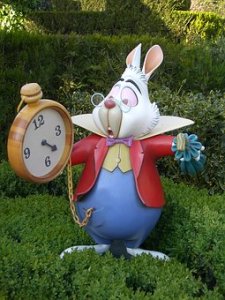
Rabbit from Alice in Wonderland with watch
Where does the time go?

Want to know more about using Instagram?

Be sure and click on Steve’s link above, and read his entire article. Because I only hit the highlights, there is much more to know about the media.

PLEASE TAKE ANOTHER MINUTE AND LOOK ME UP ON SOCIAL MEDIA BY CLICKING ON THE LINKS BELOW.

AND STOP BY JEAN’S WRITING ANYTIME, I’LL LEAVE A LIGHT ON. 

FacebookTwitterAmazonPinterest

PS!

Don’t forget your favorite Graduate!


How to use a simple method for a good story?

Of course, we all understand writing is hard. But what if you could simplify the process of starting?

Recently, I stumbled across an interesting article that helped me formulate this idea of change-

How to Write a Good Story: You’ll Love This Simple Method by 

In this article, I learned how to break down a story smaller and smaller until I get to the core.

Dead or Alive written on paper

  • One word can change a sentence.
  • One changed sentence can change a paragraph.
  • One changed paragraph can change the plot.


And how to successfully use PLOT Mutation.

Looking at sky through cutout

By looking at a story with a different perspective and making a simple, but profound change, you can turn an old plot into your own.

Give Tal’s article a read and see if you can manipulate a story into something new.

PLEASE TAKE ANOTHER MINUTE AND LOOK ME UP ON SOCIAL MEDIA BY CLICKING ON THE LINKS BELOW.

AND STOP BY JEAN’S WRITING ANYTIME, I’LL LEAVE A LIGHT ON. 

FacebookTwitterAmazonPinterest

How to leave an impression on readers

And write like the invisible man. 

You read me right. 

Reading an article by August Birch on Medium.com got me to thinking about all the books and stories I truly enjoy. Want to know what I discovered?

If I want to write a review, I must do it immediately after finishing the book. Because the mechanics of the book fade quickly, but the impression lasts much longer. I remember what books I loved and the ones I hated, but my reactions are personal and vague.

As August points out…

“When we do our best work as writers, the writing disappears in the background.”

To me, that means the mechanics and style of writing fades in the background. August suggest writers should strive for “Invisible Writing.”

Have you ever become so absorbed in a movie, you couldn’t remember the color of the actors dress? Why? Because it was a great movie! Same goes for writing a great story. As the reader sees the story in their brain, it’s as if they are experiencing the story. Explaining too much makes the mental story shut down and off.

To become an invisible writer…

  • Avoid selecting words to sound sophisticated.
  • Don’t over explain or over describe the scene.
  • Too much description reveals a lazy writer.
  • If the words don’t move the story forward, cut them.
  • Don’t make reading your story a chore, don’t make the reader think too hard.
  • Reflect rather than over think as you write.

“When the reader focuses on the writing, she’s not using her subconscious to help engage with the story — you’ve lost her.” August Birch

You really should click on the link and read the article by August Birch in its entirety. He explains in greater detail what it means to be an invisible writer.

Why We Never Want Our Readers to Remember Our Writing by August Birch

PS:

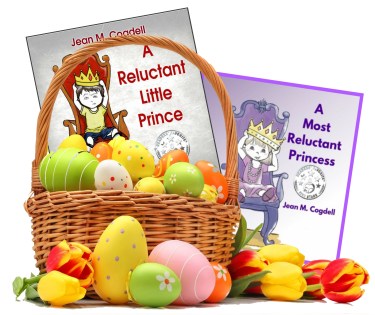
I want to wish everyone a safe and happy Easter holiday. Don’t forget to add a book to that little one’s basket.

Easter basket with books

PLEASE TAKE ANOTHER MINUTE AND LOOK ME UP ON SOCIAL MEDIA BY CLICKING ON THE LINKS BELOW.

AND STOP BY JEAN’S WRITING ANYTIME, I’LL LEAVE A LIGHT ON. 

FacebookTwitterAmazonPinterest