What you need to know about writing a children’s book?

Wow! Two years have passed.

Yes, it was two years ago this April, I finished the final touches on my first pre-school picture book.

Writing and publishing a picture book was a big learning curve.

Took me a year to finish this tiny 32-page book. Whew!

Maybe you have an idea for a children’s book, but like so many, you’ve put off starting because a picture book is a bit different from writing an adult story.

Let me speed you along toward your goal.

I’ve put together a list of 8 things I learned the hard way about writing a picture book.

  1. Buy a good PDF program. Yes, some people use MS Word but, trust me, it’s not worth the headaches. I finally settled on  Nitro Pro 10 Page Plus. It’s cheaper than Adobe and easy to use.
  2. Writers write and editors edit. Use an editor that understands children’s books. Yes, even small 32-page picture books need an editor. I found a great one by just asking around. LinkedIn and Facebook Groups are great resources. I found a wonderful editor, Margaret Welwood.
  3. Unless you can really draw, I can’t, find a good illustrator. Ask around. See #2.
  4. Decide on the size of your book. Go to the bookstore and library, look at other books for similar to your book. Me, I went with 8.5 x 8.5. Not too big or not too small for little hands.
  5. Download a photo editing program, I used Paint.NET, to help size the illustrations. Adobe will work too.
  6. Purchase an ISBN. That will help your books get into libraries.Who doesn’t want that, right? You can use the same number for IngramSpark and Amazon publishing.
  7. Use the cover templates provided by IngramSpark and Amazon or whichever publisher you decide. Each template is different.
  8. Order proof copies before you finalize and publish. Hard lesson.

My tips don’t apply to an ebook. No, this post is about producing a print picture book.

Me Let's Discuss - Jeanswriting.comDo you want to write a picture book?

Have you written one already? Do share your tips.

Did I answer some of your questions?


Want more? Click and read…

A Story Board

Free Picture Book Thumbnail Templates for Writers and Illustrators

Picture Book Dummy, Picture Book Construction: Know Your Layout

Picture book layout templates

PLEASE FOLLOW ME ON SOCIAL MEDIA BY CLICKING ON THE LINKS BELOW. STOP BY ANYTIME, I’LL LEAVE A LIGHT ON. 

FacebookTwitterAmazonPinterestStumbleupon

How to make a character more real to a reader

Now that you’ve decided on a terrific name for your characters, what next?

Real or imagined. Memoir or fiction. Doesn’t matter. Same rules apply.

Turn flat into fabulous!


The characters must come alive in a manuscript and jump from the page into a reader’s heart. If not, they stop reading.

So how do we go about breathing life into these flawed creatures?

  • Each character must have a defining description. Something unique to them.
  • Make comparisons and/or contrasts with another character. Plain Jane is best friends with Fanny Fashionista.
  • Give them something to collect, obsess over, or talent.
  • Everyone has a pet peeve, even a small one. Don’t leave it out of the story.
  • What’s in her purse, pocket, car, closet? What will she not leave home without?
  • Don’t forget her diary, journal or the divorce decree. Search out and include legal and private documents.
  • How does your character talk? Texas twang, Southern drawl, up North clip, curse, spray, slur, or tick put it in the story.
  • Look at pictures and fill in the blanks. Memoir pictures help us a lot but so do artwork for fiction. Think about it.
  • Rich, poor, political, religious, serious, hateful, jealous, and what else influenced them.
  • And don’t forget those life-changing events. Marriage, birth, death, divorce, job new/lost, love, heartbreak, sickness, etc.

My list is just a taste of a great article written by Shuly X. Cawood on Brevity.

Make Your Memoir’s “Characters”—Yes, Those Real Ones—More Real to the Reader By Shuly X. Cawood

Click and read her post to get much more details on giving life to your characters, real or imagined.

Did these tips help you?

Do you have a trick to add?

Do you have difficulty breathing life into your characters?

Do you think it’s easier to flesh out memoir characters or fiction?

Want more!

Keep reading…

One-dimensional Characters in Literature

Writing Remedy: How to Breathe Life Into One-Dimensional Characters

PLEASE FOLLOW ME ON SOCIAL MEDIA BY CLICKING ON THE LINKS BELOW. STOP BY ANYTIME, I’LL LEAVE A LIGHT ON. 

FacebookTwitterAmazonPinterestStumbleupon


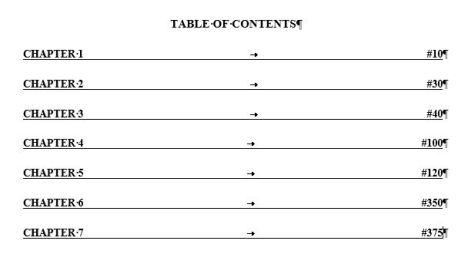
Write like a professional, get the chapters right

By getting the word count right. How?

Scene by scene.

I’ve written in the past about the word count for books but a book is made up of chapters. And chapters are made up of scenes. 

A mixture of really short and really long chapters may give your reader a case of whiplash. Make sure that doesn’t happen. 

There is nothing wrong with varying chapter length or writing a book with all short chapters, but I’d avoid the extreme. Scenes set the pace and like stepping stones lead your reader through the book. 

Randy Ingermanson on Advanced Fiction Writing, reminds us to think SCENES not CHAPTERS.

Controlling Chapter Lengths in Your Novel

Things from his post I want to remember:

  • Chapters are stepping stones to take the reader through your book.
  • Chapters consist and are controlled by SCENES.
  • Varying scene length is okay. But be consistent.
  • A good average word count for a scene is 1000-1500.
    • A little more or a little less the Keyword is average.
  • A good scene count for a chapter is driven by the scenes.
  • My writing style dictates the word count for scenes.
  • Chapter word count is determined by the number of chapters in the book.
    • 70,000 ÷ 3,000 = 23 chapters
    • 70,000 ÷ 2,000 = 28 chapters
    • ? ÷? =? chapters (you do the math.)
  • Don’t pad a scene with words just for the sake of the count.
  • Only add words to a scene that move the story forward.

Be sure and click on Randy’s link above and read his article. He has lots more to say about writing scenes that add up to a book.

Do you think in scenes when writing a chapter?

What do you think is a good length for a chapter?

Do you write the scenes first and then divide up into chapters?

Have a tip about finding that chapter/scene balance? Do share.


PLEASE FOLLOW ME ON SOCIAL MEDIA BY CLICKING ON THE LINKS BELOW. STOP BY ANYTIME, I’LL LEAVE A LIGHT ON.

FacebookTwitterAmazonPinterestStumbleupon


Do you really know what makes up a story?

Beginning, Middle, and End.

Okay, but what makes up those three pieces?

We can’t simply write:

  1. Beginning: She opened up the store each morning.
  2. Middle: She sold groceries all day.
  3. End: She closed the store at night.

No one would buy that story because it’s not a story.

What is the truth about the 3 story parts?

How do we cut it into bite-size, swallowable pieces? After all, none of us wants to choke on our own words.  

Once again, better writers than I prevail. Thanks to  over at The Creative Penn for sharing the solution by author Michaelbrent Collings

In his post, Mr. Collings breaks down the three parts of a story and how to apply them in very simple terms. So simple even I got it. LOL

Beginning: Starts with a wish/dream for something or someone.

  • Excuses Protagonist gives for not reaching for the dream.
  • Until something happens to turn the wish into a desire.

Middle: The Desire

  • Make a TO-DO list to help achieve the desire.
  • What tools, help, actions will Protagonist need to get said desire.

End: The Achievement

  • Protagonist either gets or doesn’t get heart’s desire.

Be sure and click on this link and read the entire article…

Writing Fiction: This Is How You Write A Story By Michaelbrent Collings 

Talk to me…

Did you learn anything new about story structure?

Did you find he simplified the writing process a bit?

Got any tips to share with me about keeping writing simple?


PLEASE FOLLOW ME ON SOCIAL MEDIA BY CLICKING ON THE LINKS BELOW. STOP BY ANYTIME, I’LL LEAVE A LIGHT ON. 

FacebookTwitterAmazonPinterestStumbleupon