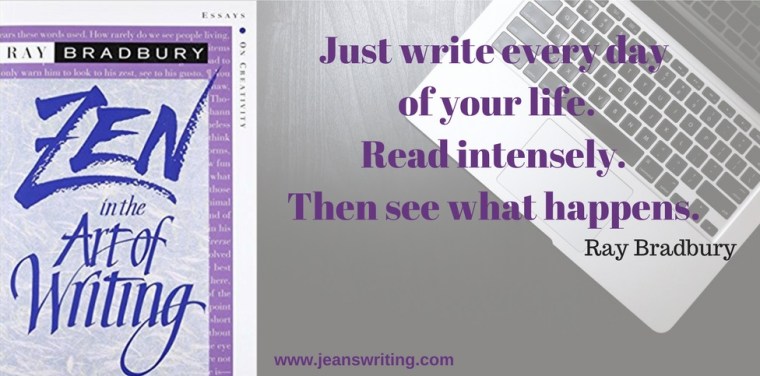
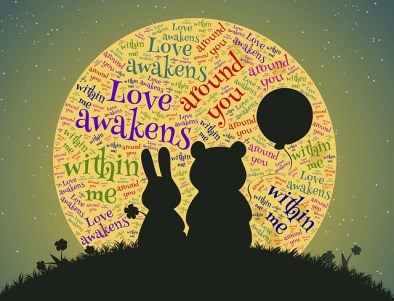
Do you want a little Monday Morning Motivation?

Well, thanks to Shaunta Grimes I’m sending a little your way.

One piece of perfect advice that will change your life (if you let it.) By Shaunta Grimes on Medium

quote by Ray Bradbury from Jean's Writing

Happy Writing!

You can find ME ON SOCIAL MEDIA BY CLICKING ON THE LINKS BELOW.

And do STOP BY Jean’s writing ANYTIME, I’LL LEAVE A LIGHT ON. 

FacebookTwitterAmazonPinterestStumbleupon

How to make your characters likable?

Or…

Is it necessary that every character be likable?

Faceless woman

Need all characters be —

pleasant, nice friendly, agreeable, affable, amiable, genial, personable, charming, popular, good-natured, engaging, appealing endearing convivial, congenial, simpatico, winning, delightful, enchanting, lovable, adorable, sweet, or lovely?

Recently, I just finished a book but didn’t like a single character. However, I did want the main character to succeed. This strange and bizarre book kept me captivated.

So, back to my first question, is it necessary for any or all characters to be liked by the reader?

Faces in a puzzle

This is an issue I’m struggling with right now. In my current WIP, I’m not sure my main character is likable. I want people to like her, emphasize with her and pull for her, but I don’t want her to come off whinny. I hate whining. Even in real life.

How do we accomplish giving characters qualities that a reader can relate to, but still see their faults?

And does every character need to have likable attributes? What about the bad guys? Do they need a few redeeming characteristics? 

See I have lots of questions and only a few answers. So jump right in and help a writer out in the comments.

Okay, here’s what I’ve figured out so far.

  • Likability means a reader “likes” watching a character. Hmm…
  • Interesting and entertaining can attract a reader too.
  • If I understand what makes a character tick, it’s easier for a reader to relate.
  • No one is perfect, even the good guys. Show their flaws.
  • Avoid a “too good” character. No one likes a goody-two-shoes.
  • A kind-hearted act can make a character seem loveable.
  • A tragic backstory will make a reader root for the character.
  • Let the reader see a character’s vulnerability.
  • A sense of humor can go a long ways toward likable.
  • Avoid making a character “too bad.” Readers want to believe everyone has some redeeming qualities.
  • The name must fit the character.

And one last question…

Do you write the likable characteristics of a character in the first draft, Or do you add those traits in the second draft?

Want to read great articles on fleshing out a character? Then click and read.

Make your characters L.I.E.

10 Methods to Make Your Character Likable 

What Makes a Character Likable?

PLEASE FOLLOW ME ON SOCIAL MEDIA BY CLICKING ON THE LINKS BELOW. STOP BY ANYTIME, I’LL LEAVE A LIGHT ON. 

FacebookTwitterAmazonPinterestStumbleupon

Do you focus on the eyes to see the character?

Do you believe the eyes are windows to the soul?

Whether you believe this cliché or not, eyes are important. How you describe the eyes of a character can reveal a lot to the reader.

“Eyes that sparkled like sapphires glanced my way.”

This sentence tells us only that the person is blue-eyed.

BUT…

“Cold, blue eyes locked with mine. A chill rippled down my spine.” 

Tells us the character has blue eyes and may be dangerous.

“Her blue gaze froze me in place.”

Lets us know the character is a woman and she ain’t happy.

“Lines crinkled at the corners of her sapphire eyes as they danced with mischief.”

This last one, again indicates the character is a woman and she may be laughing at or with another character.

If a body part is as important as William Shakespeare contended, we need to make certain our readers see into the heart of our characters. Through their eyes.

Thanks to Chris, my favorite Ape for directing me to a great blog post with terrific examples on how to bring a character to life through their eyes.

65 Ways to Describe Sight and Eyes in Your Writing 

Me Let's Discuss - Jeanswriting.com

  • What do you think?
  • Do you like the list of eye descriptions?
  • How would you write a sentence to show a character’s personality or attitude?

PLEASE FOLLOW ME ON SOCIAL MEDIA BY CLICKING ON THE LINKS BELOW. STOP BY ANYTIME, I’LL LEAVE A LIGHT ON. 

FacebookTwitterAmazonPinterestStumbleupon

Do you really know what makes up a story?

Beginning, Middle, and End.

Okay, but what makes up those three pieces?

We can’t simply write:

  1. Beginning: She opened up the store each morning.
  2. Middle: She sold groceries all day.
  3. End: She closed the store at night.

No one would buy that story because it’s not a story.

What is the truth about the 3 story parts?

How do we cut it into bite-size, swallowable pieces? After all, none of us wants to choke on our own words.  

Once again, better writers than I prevail. Thanks to  over at The Creative Penn for sharing the solution by author Michaelbrent Collings

In his post, Mr. Collings breaks down the three parts of a story and how to apply them in very simple terms. So simple even I got it. LOL

Beginning: Starts with a wish/dream for something or someone.

  • Excuses Protagonist gives for not reaching for the dream.
  • Until something happens to turn the wish into a desire.

Middle: The Desire

  • Make a TO-DO list to help achieve the desire.
  • What tools, help, actions will Protagonist need to get said desire.

End: The Achievement

  • Protagonist either gets or doesn’t get heart’s desire.

Be sure and click on this link and read the entire article…

Writing Fiction: This Is How You Write A Story By Michaelbrent Collings 

Talk to me…

Did you learn anything new about story structure?

Did you find he simplified the writing process a bit?

Got any tips to share with me about keeping writing simple?


PLEASE FOLLOW ME ON SOCIAL MEDIA BY CLICKING ON THE LINKS BELOW. STOP BY ANYTIME, I’LL LEAVE A LIGHT ON. 

FacebookTwitterAmazonPinterestStumbleupon