Do you want to join me and write short burst of creativity?

Are you up for a challenge?

What can you say in 140 characters?

Not words, but characters. That includes spaces.

Flash Fiction is one of my favorite story forms. The constraints of 100 – 1000 words require me to judge each and every word.

But how about Twitter stories?

Can I paint a vivid picture in 140 characters? Can you? Let’s find out.

There are several hashtags to follow writers who love the quick, down and dirty writing in 140 characters.

  • #140story
  • #140
  • #140tale
  • #twittertales
  • #storyin140
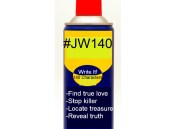
  • And now mine: #JW140

JW140

(#JW140 kinda sounds like that oil we spray on squeaky hinges) Now that just gave me an idea. LOL

I’m sure there are more, but this should get us started.

So here is my challenge:

Tweet a tale in 140 characters, use the #JW140 plus any of the others listed above, and then link to your tweet in the comments section. Tweet and retweet!

To find mine, find my story go to Twitter and search for #JW140.

Let’s have some fun. No telling where your story might lead. A new book, maybe? Hmm.

Use a story in progress, or one already written.

Tweet your story once a day, twice a day, or whenever. Doesn’t matter, you are in charge.

But if you need ideas to jump-start your muse, check out Mashable Readers.

Doesn’t matter when you join in, today, tomorrow or next week. No pressure and if you miss a day, pssft! Who cares. This is going to be fun. Start and stop when you want.

You’ve made it this far so give me just two more seconds and hit Facebook and Twitter and share.
Thank you!
If you’re not already, I’d be much obliged if you would follow me @jeancogdell on Twitter or jean.cogdell on Facebook!

Do critiques discourage you?

“Hey, what’s up?” I answered the phone with my usual greeting.

“I’ve just been stripped naked and marched down main street.”

I swiveled away from my computer screen. She had my undivided attention.

“Do what? What are you talking about?”

My sister, critique partner and an amazing writer then explained. Seems she’d won an evaluation for her WIP (work in progress) from a noted author, teacher and blogger.

The prize evaluation had been delivered this morning, like an atom bomb, via conference call.

It wasn’t what she’d expected.

“More like a public flogging,” she said.

“Ouch, it couldn’t have been that bad.”

What else was I going to say?

“Trust me it was. I’m now rethinking not only my entire story, but my talent too.”

“Whoa, wait a second. You’ve written over 40 thousand words. You can’t throw it in the trash. I’m sure you just took the critique too seriously.”

Now let me say upfront, she is a very good writer. I hear you, you think my opinion is skewed and that may be, but let me assure you, she can tell a hell of a story.

My job at this point is to just listen and let her vent before I step in with the voice of reason.

Why am I sharing this with you? Sometimes I think we as writers need to hear more than what we are doing wrong. Anyone who steps out of their comfort zone as she did is:

  1. Brave! Anyone who subjects themselves to an indepth evaluation of this type is DAMN BRAVE. Definately braver than I am.
  2. Critiques are subjective. Opinions are like tastes, but not all are equal. As such, take with a grain of salt and move on.
  3. Talent like beauty, is in the eye of the beholder. Or in the instance of a writer, the eyes of the reader.

I’m sure she learned a lot from the author and her evaluation prize.  I’m equally sure the author meant the critique to be constructive.

Why did I share this? As a reminder.

  • Don’t let anyone pour cold water on your dreams.
  • Absorb the positive, helpful information, and then shake off the negative.
  • And remember no matter how thick your skin, some things still smart.

Read LYNNETTE LABELLE “Do You Have Thick Skin? Are You Sure?” for help dealing with rejections.

And from one writer to another, remember to write it your way!

Mechanics are important, but it’s the story that must shine.

You’ve made it this far so give me just two more seconds and hit Facebook and Twitter and share.
Thank you!
If you’re not already, I’d be much obliged if you would follow me @jeancogdell on Twitter or jean.cogdell on Facebook!

Do you bog down the reader with too many details?

How much is enough?

Is the Devil really in the details?

Many of y’all are too young to remember Dragnet, a 1950’s TV series. A movie remake in 1987 starring Dan Aykroyd, and Tom Hanks didn’t do justice to the old B&W series.

But so many times I want to make sure my reader “gets” the point. As a result, too often I bog the reader down in details that just muddy the water.

As Joe Friday used to say, “Just the facts, Ma’am.”

Like many of you readers out there, I sometimes skip through a story like Dorothy on the yellow brick road rushing toward Oz.

No one, myself included wants to read the boring stuff. So how do we strike a balance?

Jerry Jenkins wrote, How to Evoke Powerful Images in Your Reader’s Mind

In his post, he suggests that too often as writers, we crush the reader’s imagination instead of igniting the images.

Don’t force the details. Every reader wants an “ah-ha” moment.

Don’t strive for the reader to see what you see.

Resist the urge to explain and trust the reader to follow their own path of discovery.

So what do you think? Is your writing lighting fires or crushing the reader under the boulders of information?

You’ve made it this far so give me just two more seconds and hit Facebook and Twitter and share.
Thank you!
If you’re not already, I’d be much obliged if you would follow me @jeancogdell on Twitter or jean.cogdell on Facebook!

After years of hiding my words from the world, I have found my voice

I’m thrilled this rainy morning to brag on a special person. My sister, and fellow writer Sheila Good featured today over at —

You’ve made it this far so give me just two more seconds and hit Facebook and Twitter and share.
Thank you!
If you’re not already, I’d be much obliged if you would follow me @jeancogdell on Twitter or jean.cogdell on Facebook!