Posts

You might want to avoid these subjects like the plague.

In addition to my novel in process, I have another kid book in the works.

In the following video, Darcy Pattison tells us 17 topics to avoid and WHY.  Let’s face it, some ideas have been done to death. Which makes me wonder if some of these topics might apply to adult fiction too. Hmm.

So, writer beware, proceed with caution.

17 topics to avoid unless you’ve found a new and unique twist.

  1. The first day of school
  2. Clean your room
  3. Tooth Fairy
  4. Halloween & Christmas
  5. I want a pet
  6. Dealing with a disability
  7. Hello, my name is…
  8. Grandma & Grandpa
  9. New baby
  10. Barnyard stories
  11. Bedtime stories
  12. Personal hygiene
  13. Monsters & acting un-monster like
  14. Going green
  15. I love you books
  16. I’m bored
  17. Baby bird learns to fly


What did you think? Do you agree?

Is there another topic you think has been overdone? Do tell.

Could some of these topics be overdone in adult fiction too?

Are you writing a book for kids or YA?

Did you learn anything new?

YOU CAN FIND ME ON SOCIAL MEDIA BY CLICKING ON THE LINKS BELOW.
AND DO STOP BY JEAN’S WRITING ANYTIME, I’LL LEAVE A LIGHT ON. 

Twitter @jeancogdell, Facebook at jeanswriting   and  Amazon.com

Do you know the difference in a prologue and epilogue?

And

How do you know when a story needs one or both?

My current work in progress (WIP) has a short introduction (prologue.) So, I thought doing a little research on the subject might be in order. After all, I do want the reader to read past the first couple of pages. Right?

Here’s what I learned about the two.

  • A writer can use both to bookend a novel or use just one.
  • A prologue is where you can introduce something important to the story.
  • An epilogue is the cherry on top. The ending after the ending.

What I learned about a prologue.

A prologue should include one or all the three elements.

  1. Setting/fictional world and how the character came to be there.
    • Set the stage with a frame of reference for the reader.
  2.  An event key to the story and a character’s response.
    • Describe with action and suspense, not just adjectives.
    • Perfect place to let the event introduce a theme.
  3. Create intrigue.
    • Set up the reader to keep reading.

My WIP prologue includes #2 & 3.

I’ve not given much thought to epilogues before today. Although, I do enjoy reading a good one that wraps up a story. Especially a book that kept me on edge from beginning to end. A good epilogue relieves tension and enables me to tie all the dangling pieces together in one big knot.

What I learned about writing an epilogue.

  1. Wrap everything up into “happily ever after.”
  2. An epilogue can be used to hint or introduce a sequel.
  3. A place for the characters to reflect on the story.
  4. Show growth and change in a character.

Want to know more? Then drop to the end and click on a few terrific links.

But first…

Me Let's Discuss - Jeanswriting.comHave you ever written a prologue or epilogue for a book?

Do you plan on writing either for your WIP?

Do you like reading either in books?

Or, do you think books are better without either one?

What did I forget?

Talk to me in the comments. I’d love to hear your thoughts.

YOU CAN FIND ME ON SOCIAL MEDIA BY CLICKING ON THE LINKS BELOW.
AND DO STOP BY JEAN’S WRITING ANYTIME, I’LL LEAVE A LIGHT ON. 

Leave light on

FacebookTwitterAmazonPinterestStumbleupon


Framing the Novel: The Prologue and the Epilogue By Reba White Williams

What is a prologue (and epilogue)? Examples and tips

Parts of a Novel: What is Foreword, Preface, Introduction, Prologue, and Epilogue?

Prologue & Epilogue


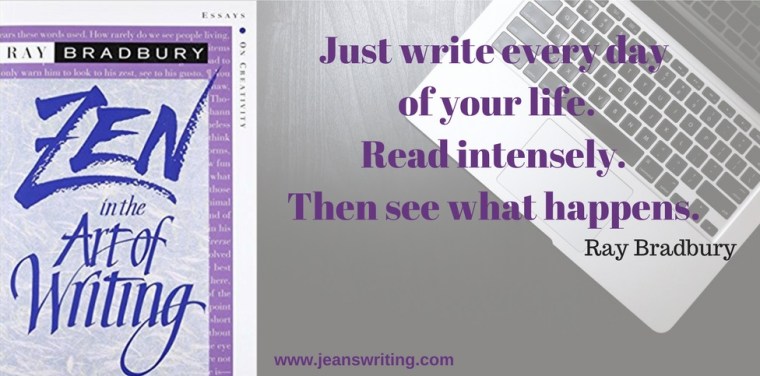
Do you want a little Monday Morning Motivation?

Well, thanks to Shaunta Grimes I’m sending a little your way.

One piece of perfect advice that will change your life (if you let it.) By Shaunta Grimes on Medium

quote by Ray Bradbury from Jean's Writing

Happy Writing!

You can find ME ON SOCIAL MEDIA BY CLICKING ON THE LINKS BELOW.

And do STOP BY Jean’s writing ANYTIME, I’LL LEAVE A LIGHT ON. 

FacebookTwitterAmazonPinterestStumbleupon

How to make your characters likable?

Or…

Is it necessary that every character be likable?

Faceless woman

Need all characters be —

pleasant, nice friendly, agreeable, affable, amiable, genial, personable, charming, popular, good-natured, engaging, appealing endearing convivial, congenial, simpatico, winning, delightful, enchanting, lovable, adorable, sweet, or lovely?

Recently, I just finished a book but didn’t like a single character. However, I did want the main character to succeed. This strange and bizarre book kept me captivated.

So, back to my first question, is it necessary for any or all characters to be liked by the reader?

Faces in a puzzle

This is an issue I’m struggling with right now. In my current WIP, I’m not sure my main character is likable. I want people to like her, emphasize with her and pull for her, but I don’t want her to come off whinny. I hate whining. Even in real life.

How do we accomplish giving characters qualities that a reader can relate to, but still see their faults?

And does every character need to have likable attributes? What about the bad guys? Do they need a few redeeming characteristics? 
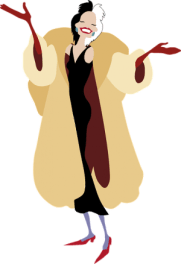
See I have lots of questions and only a few answers. So jump right in and help a writer out in the comments.

Okay, here’s what I’ve figured out so far.

  • Likability means a reader “likes” watching a character. Hmm…
  • Interesting and entertaining can attract a reader too.
  • If I understand what makes a character tick, it’s easier for a reader to relate.
  • No one is perfect, even the good guys. Show their flaws.
  • Avoid a “too good” character. No one likes a goody-two-shoes.
  • A kind-hearted act can make a character seem loveable.
  • A tragic backstory will make a reader root for the character.
  • Let the reader see a character’s vulnerability.
  • A sense of humor can go a long ways toward likable.
  • Avoid making a character “too bad.” Readers want to believe everyone has some redeeming qualities.
  • The name must fit the character.

And one last question…

Do you write the likable characteristics of a character in the first draft, Or do you add those traits in the second draft?

Want to read great articles on fleshing out a character? Then click and read.

Make your characters L.I.E.

10 Methods to Make Your Character Likable 

What Makes a Character Likable?

PLEASE FOLLOW ME ON SOCIAL MEDIA BY CLICKING ON THE LINKS BELOW. STOP BY ANYTIME, I’LL LEAVE A LIGHT ON. 

FacebookTwitterAmazonPinterestStumbleupon