How to avoid crowding your story with people

I hate crowds. Theme parks, large parties, or squeezing past a million people in Times Square are a few of the things that make me claustrophobic. As if walls of people are closing in around me. Something similar happens when I’m reading a book with too many characters fighting for my attention. Soon, I’ll lay the book down, unfinished, and pick up another. Flipping back and forth to see who is talking drives me nuts.

So, just how many characters are too many?

How do you know who to cut and who to keep?

I’ve always heard it’s best to keep it simple. No one needs to know the entire background of the doorman unless he is the killer.

I discovered a great article that might help you understand how to determine which characters to keep.

Too Many Cooks in the Kitchen: Why you shouldn’t overload your novel with characters. By Erica Ellis 

Signs your story has too many people, if a character…

  • Pops up begging to tell their own story. Makes you feel like playing “whack-a-mole.”
  • Diverts the reader’s attention taking them down rabbit holes.
  • Becomes a limelight hog, not content to stay in the shadows.
  • Doesn’t help promote the main character’s progress, moving the plot forward.

Too many characters can remove the intimate feel of a story. Which stops the reader from forming a bond with the main character.

Be sure and click on Erica’s post and read more about how to avoid too many characters in your story.

Me Let's Discuss - Jeanswriting.comIs adding too many characters or subplots a problem for you?

Do your minor characters beg for more attention?

Do you have a good tip for selecting the right character?


PLEASE TAKE ANOTHER MINUTE AND LOOK ME UP ON SOCIAL MEDIA BY CLICKING ON THE LINKS BELOW.
AND STOP BY JEAN’S WRITING ANYTIME, I’LL LEAVE A LIGHT ON. 

FacebookTwitterAmazonPinterestStumbleupon 


Are you searching for a good writers group?

Well, look no further. Because I’m ready to introduce you to a fellow blogger and author who has it all together.

Today, I’m pleased to welcome Ryan Lanz. 

Hello Jean! Thanks for having me on.

Ryan, tell my readers a little about yourself. Where you’re from, and about your family life.

I’m from the Midwest, USA, although I was born and raised in Hawaii. However, I moved from Hawaii to California when I was a teenager. I’ve lived in the Midwest since my younger 20’s. There’s no beach, but the thunderstorms are great. Most of my immediate family still lives in Hawaii.

I enjoy billiards, traveling, scuba diving, and writing.

Ooh, Hawaii. One of my favorite vacation places. I do hope your family is safe from the volcano eruptions I’ve been reading about. 

Thank you. Some of my family lives on the island of Oahu, where there isn’t an active volcano. My grandparents live not far from the active volcano, but it seems they’re in the clear.

I understand you have some news to share. Do tell. 

I’ve recently relaunched A Writer’s Path Writers Club, which is a club where authors receive free and discounted writing-related services, such as editing, book cover design, book coaching, formatting, narration services, etc. www.patreon.com/AWritersPath

We’re excited to have the group we do, and it’s bustling pretty well.

When and why did you begin writing?

I first started writing as a teenager, although it was awful. I didn’t start to polish my writing until well into my 20’s, in my opinion. But it was an important stage of my life to try.

When did you first consider yourself a writer?

I’d say when I started writing my first novel, which will likely never see the light of day. I’m still glad I wrote it, though.

What inspired you to write your first book? 
It sounds corny but the ability to create something new out of nothing. It’s literally anything you want out of a complete void. I think that concept is neat.

Do you have a specific writing style? Is there anything about your style or genre that you find particularly challenging? 

I write in quite a few genres, mostly under a pen name, so that sometimes is a challenge, marketing wise. It’d certainly be easier to market in the same genre.

Who designs your book covers?  
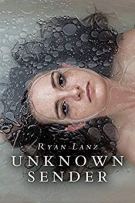
I offer a book design service where I contract out to different designers, all under one roof. I also provide other services, ranging from book coaching, editing, manuscript evaluation, formatting, etc.

Who is your favorite writer, and what is it about their work that really strikes you?

My favorite author of all time is the late Robert Jordan regarding the Wheel of Time series. I would trade quite a bit to read anything more by him. In some ways, I’m tempted to read the last book of the Wheel of Time series the same way Desmond wants to read Our Mutual Friend in the TV show Lost.

Do you see writing as a career?

Absolutely. I love self-publishing. I’d rather have a smaller passive income than a large one-time or temporary income. It starts out small, but it can be built over time, brick by brick.

Did you learn anything during the writing of your recent book?

I find that I learn something new when writing each story, no matter the length. Sometimes, it’s a writing mechanic and sometimes it’s learning about a new type of character.

Any advice for other writers?

It’s been said before, but just remember that a writing career is a long-term thing. It’s playing the long game. So, if you’re in it, be prepared for the long haul. Sometimes it’s long-term before many rewards, but I believe the rewards are long term.


Do you have a blog or website readers can visit for updates, events and special offers?

Yes, I do. My writing tips website is www.ryanlanz.com and as mentioned, my Writers Club website is www.patreon.com/AWritersPath.

New things are coming out weekly and sometimes daily. It’s certainly an exciting time.

Readers, if you want to know more about Ryan his website and writers club, check out the links below.

https://www.patreon.com/AWritersPath

https://www.amazon.com/Ryan-Lanz/e/B00Z2GM95G/ref=dp_byline_cont_ebooks_1

https://ryanlanz.com/my-books/

https://ryanlanz.com/

PLEASE TAKE ANOTHER MINUTE AND LOOK ME UP ON SOCIAL MEDIA BY CLICKING ON THE LINKS BELOW.
AND STOP BY JEAN’S WRITING ANYTIME, I’LL LEAVE A LIGHT ON. 

FacebookTwitterAmazonPinterestStumbleupon 

Find out how to stop killing your voice

And let readers know your works by your voice.

As soon as I opened my mouth, friends knew it was me, even before caller ID.  All I had to say was hey.

Although I’m not particularly fond of teasing about my accent, I do want anyone who reads my book to recognize my writing. In a good way of course. Don’t you?

A few days ago I wrote tips on how to avoid writing like a newbie, which is my biggest fear. Even bigger than selling no books. Well, maybe they’re both my number one fears. A writer can have two at the top right? Anyway, the previous post was about how the pitfalls of word choice can show your newbie-ness. Seems there are way too many pitfalls to avoid. Thank God for Beta readers and Editors. Of course, I have to finish the manuscript and swallow my insecurities and turn my baby over to them. I think that’s also why I procrastinate on finishing the damn thing. But back to the topic at hand.

Anytime I can find a tip to help improve my chances of producing an amateurish, embarrassing book, I leap on it.

Kiara Mijares at The Writing Cooperative gives us three tips to help in her article –

Click and read You’re killing your writing voice. Here are 3 ways to stop

What I learned about keeping my writing voice alive.

  • The first thing I need to remember is to use my voice!
  • Like I often admonished my kids, “Think before you speak.” I need to apply the same principle to writing. After all, we’re speaking our story on to paper.
  • Again, as a mom, many a time, I reminded my kids, “You best remember who you’re talking to.” Another lesson I need to apply to my writing. As Kiara points out, we are striking up a conversation with a reader.
  • As with any good conversationalist, learn to listen. Listen to the reader. If a conversation is one-sided it becomes a speech.
  • Keep story tight and concise. Cut like a maniac with a switchblade.
  • Don’t stop to edit when writing that first draft. (A big problem for me.)
  • Speak aloud as you write to avoid sounding like a robot and to find a natural rhythm. (Hmm, this might help me stop editing as I go. Gotta try it.)

What do you think? Any of this ring a bell?

Does a reader instantly know you’re voice?

Have you ever thought about speaking aloud as you type?

What is your number one fear as a writer?


GOT A MINUTE? LOOK ME UP ON SOCIAL MEDIA BY CLICKING ON THE LINKS BELOW.
AND DO STOP BY JEAN’S WRITING ANYTIME, I’LL LEAVE A LIGHT ON. 

FacebookTwitterAmazonPinterestStumbleupon


How to make readers love and hate your villain

Make him one of the beautiful people.

Writing a villain and/or an antagonist is not as easy for me as the good guys.

A few days ago I wrote a post about the difference and similarities between the antagonist and a villain.  And think whether you choose to blend the bad guy into the antagonist or just let your villain go it alone, the information I discovered after reading Bonnie Randall’s article What The Well-Dressed Villain Is Wearing These Days may help us all to write better well-rounded bad guys.


Here’s what I discovered.

  1. I want a villain to look down and dirty. Road hard and put up wet. Know what I mean? Not like a beauty queen or movie star. But I realized Bonnie is right. Not all villains can look like the Joker in Batman. How many times have we heard, “He looked like such a nice young man, not a killer.” No, it’s scarier and more unsettling when he walks among us unrecognized.
  2. He’s smart. But, oh don’t we all want a villain/antagonist to be dumb as dirt? I certainly prefer to outsmart the bad guys than to be manipulated by one. Again, no one wants to end up blurting out, “I thought you were my friend,” just before the knife plunges. Yikes.
  3. The good guys may get irritated because the villain is right all the damn time. They want to feel and act superior to everyone. Yep. Think about it. How many times do you want to wipe the floor with a beautiful smug face? Nobody likes a know it all.
  4. They act like babies when threatened. Challenge their knowledge, their appearance, their knowledge, why challenge anything and temper tantrums abound. A good villain has suppressed anger issues that can’t stay hidden for long.
  5. They are harboring an imagined slight from their past which has stunted their maturity.

So far, I’ve gotten one thing right on Bonnie’s list. My antagonist/villain dresses like a fashionista. Now on to the other four. Lots to do, lots to do. Hmm, I’m beginning to see why actors agree to play bad guys, is more fun.

Now that you’ve read all the great tips on plumping up your villain/antagonist let me know what you think.

Me Let's Discuss - Jeanswriting.comDo you think an attractive bad guy is scarier?

Do you think using these tips will make a better villain?

How about other characteristics? What would you add to make a more believable bad guy?


YOU CAN FIND ME ON SOCIAL MEDIA BY CLICKING ON THE LINKS BELOW.
AND DO STOP anytime at JEAN’S WRITING, I’LL LEAVE A LIGHT ON. 

FacebookTwitterAmazonPinterestStumbleupon