Posts

Today on a more personal note

This is a place to learn and share tips on improving the craft of writing and blogging.

However, today, I’d like to take a minute to apologize and share why I’ve been remiss in replying to your comments in a timelier manner.

I’ve been back East with family, saying goodbye to a wonderful courageous woman. My beautiful strong niece lost a very long battle with breast cancer last week. 

It was wonderful to see my big family and large number of friends, but I would have gladly put off this reunion for several more years to avoid this sad occasion.
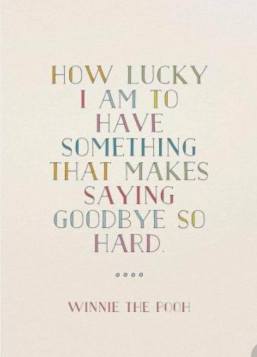
Lori fought the great fight for over nine years with grace and courage. She never bowed to the pain or demands cancer inflicted on her body and mind. She lived her life on her terms and we all watched in awe.

Today our hearts are heavy with her loss, but we are also filled with joy for having known her. Because Lori brought laughter into each room she entered.

Image result for quotes- because i was

She left the world a better place because she spent forty-four years in our midst. 

For Lori…
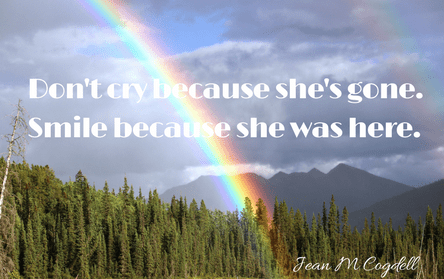
We will miss you but you will never be forgotten.

Thank you for your indulgence as I deviated from my usual subject to honor a wonderful woman.

PLEASE FOLLOW ME ON SOCIAL MEDIA BY CLICKING ON THE LINKS BELOW. STOP BY ANYTIME, I’LL LEAVE A LIGHT ON.

FacebookTwitterAmazonPinterestStumbleupon

Write like a professional, get the chapters right

By getting the word count right. How?

Scene by scene.

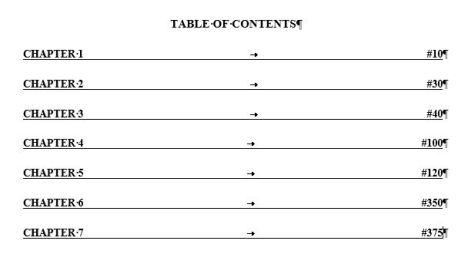
I’ve written in the past about the word count for books but a book is made up of chapters. And chapters are made up of scenes. 

A mixture of really short and really long chapters may give your reader a case of whiplash. Make sure that doesn’t happen. 

There is nothing wrong with varying chapter length or writing a book with all short chapters, but I’d avoid the extreme. Scenes set the pace and like stepping stones lead your reader through the book. 

Randy Ingermanson on Advanced Fiction Writing, reminds us to think SCENES not CHAPTERS.

Controlling Chapter Lengths in Your Novel

Things from his post I want to remember:

  • Chapters are stepping stones to take the reader through your book.
  • Chapters consist and are controlled by SCENES.
  • Varying scene length is okay. But be consistent.
  • A good average word count for a scene is 1000-1500.
    • A little more or a little less the Keyword is average.
  • A good scene count for a chapter is driven by the scenes.
  • My writing style dictates the word count for scenes.
  • Chapter word count is determined by the number of chapters in the book.
    • 70,000 ÷ 3,000 = 23 chapters
    • 70,000 ÷ 2,000 = 28 chapters
    • ? ÷? =? chapters (you do the math.)
  • Don’t pad a scene with words just for the sake of the count.
  • Only add words to a scene that move the story forward.

Be sure and click on Randy’s link above and read his article. He has lots more to say about writing scenes that add up to a book.

Do you think in scenes when writing a chapter?

What do you think is a good length for a chapter?

Do you write the scenes first and then divide up into chapters?

Have a tip about finding that chapter/scene balance? Do share.


PLEASE FOLLOW ME ON SOCIAL MEDIA BY CLICKING ON THE LINKS BELOW. STOP BY ANYTIME, I’LL LEAVE A LIGHT ON.

FacebookTwitterAmazonPinterestStumbleupon


Do you really know what makes up a story?

Beginning, Middle, and End.

Okay, but what makes up those three pieces?

We can’t simply write:

  1. Beginning: She opened up the store each morning.
  2. Middle: She sold groceries all day.
  3. End: She closed the store at night.

No one would buy that story because it’s not a story.

What is the truth about the 3 story parts?

How do we cut it into bite-size, swallowable pieces? After all, none of us wants to choke on our own words.  

Once again, better writers than I prevail. Thanks to  over at The Creative Penn for sharing the solution by author Michaelbrent Collings

In his post, Mr. Collings breaks down the three parts of a story and how to apply them in very simple terms. So simple even I got it. LOL

Beginning: Starts with a wish/dream for something or someone.

  • Excuses Protagonist gives for not reaching for the dream.
  • Until something happens to turn the wish into a desire.

Middle: The Desire

  • Make a TO-DO list to help achieve the desire.
  • What tools, help, actions will Protagonist need to get said desire.

End: The Achievement

  • Protagonist either gets or doesn’t get heart’s desire.

Be sure and click on this link and read the entire article…

Writing Fiction: This Is How You Write A Story By Michaelbrent Collings 

Talk to me…

Did you learn anything new about story structure?

Did you find he simplified the writing process a bit?

Got any tips to share with me about keeping writing simple?


PLEASE FOLLOW ME ON SOCIAL MEDIA BY CLICKING ON THE LINKS BELOW. STOP BY ANYTIME, I’LL LEAVE A LIGHT ON. 

FacebookTwitterAmazonPinterestStumbleupon

Unique, beautiful or strange; how do you select the best name?

Naming characters can be hard. Is for me. I worry over them like newborn babes.

So…

Just how important is choosing the right name?

Turns out very! That is if you want to write memorable characters. No writer wants their readers to go whats-his-name killed whois.No, we want our characters to come alive on paper. Well, how do we select really good names? I don’t know all the answers but Anne R. Allen wrote a post…

10 Tips for Finding Memorable Character Names for your Fiction

In her post, she gives us ten things to consider when selecting names.

  1. Name only star players.
    • I love this tip. A delivery guy is just a delivery guy.
  2. Don’t confuse readers with same sounding names.
  3. Don’t change names in the middle of the story.
    • Nickname? State it up front and go with it. I need to give this some thought.
  4. Make sure the name fits the century.
  5. Check the spelling and name is familiar in the country, state you’re writing about.
  6. Don’t make up fake names unless writing fantasy.
    • Only works for fake worlds.
  7. Run your chosen names through Google.
    • Good advice. Don’t want the name to be a real person living around the corner.
  8. Avoid overused names.
    • Hmm, may have a problem here. Got work to do.
  9. Try name generators.
    • I like Scrivener generator but there are several on the web.
    • Check the obituaries for a cool name.
  10. If you decide to change a name mid-stride of your WIP, do a search and replace to catch each one.

I believer her tips could also apply to places.

Click on Anne’s link above and read her entire post, she gives a lot more information and a few great resource links.

Well? What did you think?

Do you need to change a characters name?

Think you are better prepared to select a name?

Do you have any good tips to share for picking the perfect name?

PLEASE FOLLOW ME ON SOCIAL MEDIA BY CLICKING ON THE LINKS BELOW. STOP BY ANYTIME, I’LL LEAVE A LIGHT ON. 

FacebookTwitterAmazonPinterestStumbleupon